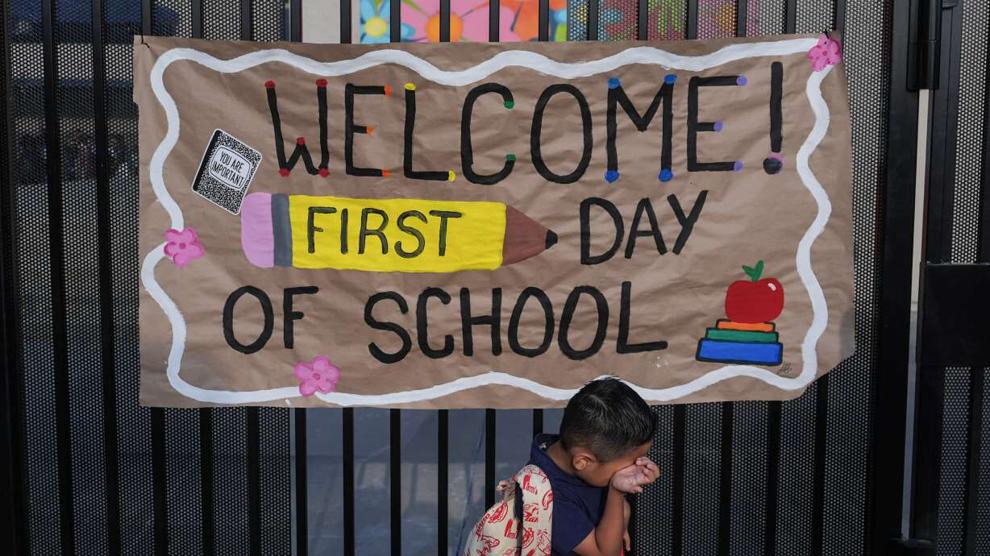

In a world where parents, teachers, search engines and AI tools can provide answers almost instantly, educators and developmental experts say children still need opportunities to work through low-stakes problems on their own. The goal is not to leave children unsupported, but to give them age-appropriate challenges while remaining available when they genuinely need help. Experts say these experiences can help children practice decision-making, problem-solving, self-regulation and resilience. Norwalk Hour
Introduction
🧠 Children growing up in the age of instant answers are getting more information and assistance than ever before. But educators and child-development experts say that convenience can create a surprising parenting challenge: knowing when to help and when to let children figure things out themselves.
The issue was highlighted in an Associated Press education report published Sept. 11, 2026, which examined why children need opportunities to struggle with everyday, low-risk problems. The report featured educators and developmental specialists who argue that solving problems is itself a skill that children need to practice.
That can be difficult for modern parents. A child who forgets a lunch, cannot solve a homework question or does not know what to do next can often receive immediate assistance from an adult—or increasingly, from technology and AI.
But helping is not always the same as solving.
Experts cited in the AP report say parents can sometimes support children’s development more effectively by pausing, asking questions and allowing children to attempt solutions before stepping in.
The distinction is important: letting a child struggle does not mean ignoring the child or allowing serious distress. It means giving children appropriately sized challenges in safe situations and providing support without automatically taking over.
Research from the Center on the Developing Child at Harvard University similarly emphasizes that children develop important executive-function and self-regulation abilities through practice, feedback and age-appropriate support. Harvard Center on Child Development
What Happened?
The discussion comes at a time when children have unprecedented access to information and adults have unprecedented ability to monitor their lives.
Parents can track a child’s location, communicate with teachers quickly, monitor grades and solve problems through digital tools. Search engines and AI systems can also provide explanations or answers almost immediately.
The AP report argues that this convenience can sometimes remove opportunities for children to discover solutions independently.
Dr. Dana Suskind, a University of Chicago professor of surgery and pediatrics, told AP that the experience of figuring something out can itself be more valuable than simply receiving an answer.
The report also cited Dr. Stephanie Carlson, director of the Institute of Child Development at the University of Minnesota, who said that children who rarely have to work through problems independently may have more difficulty when they eventually face situations where they must do so.
The experts’ message is not that adults should disappear from children’s lives.
Instead, parents can adjust how they help.
Rather than immediately fixing a problem, an adult might ask:
- “What do you think you should do?”
- “What could you try first?”
- “What happened last time?”
- “Is there another way?”
- “What would happen if you tried that?”
These questions allow children to remain active participants in solving the problem.
Key Details
The central ideas emerging from the expert discussion include:
- Problem-solving requires practice. Children do not automatically develop independence simply because they get older.
- Low-stakes challenges can be useful. Forgetting an assignment or struggling with a puzzle is different from facing a dangerous situation.
- Parents can pause before intervening. Asking questions may give children time to develop their own solutions.
- Boredom can have a role in development. Children do not need to be entertained or directed every moment.
- Routine activities can teach independence. Shopping, organizing belongings, planning activities and handling age-appropriate responsibilities can provide natural practice.
- Asking for help is also independence. Knowing when you do not have an answer and finding an appropriate person to ask is an important life skill.
- Safety comes first. Children should not be left to manage situations beyond their age, maturity or abilities.
- Supportive relationships remain essential. Harvard’s child-development research emphasizes that children build resilience through supportive relationships alongside opportunities to develop coping skills.
Background: Why “Struggle” Can Be Useful
The word struggle can sound negative when discussing children.
In this context, however, educators are generally referring to manageable frustration and challenges, not serious hardship, neglect or traumatic experiences.
That distinction is crucial.
The Center on the Developing Child at Harvard University says children need opportunities to cope with manageable challenges and that supportive relationships help provide the foundation for resilience. At the same time, prolonged or excessive stress can be harmful to development.
In other words, there is a difference between:
“I can’t solve this puzzle yet.”
and
“I am facing a situation that is unsafe or overwhelming.”
The first can be an opportunity to practice persistence.
The second may require immediate adult intervention.
Harvard researchers describe children’s development as involving a balance between protective relationships, skill-building and exposure to manageable challenges. pediatrics.developingchild.harvard.edu
The Digital Age Has Changed How Quickly We Can Help
Technology has changed the speed at which children can obtain information.
A child wondering how to spell a word can look it up. A student struggling with a math concept can find a video explanation. A parent who does not know an answer can search online.
AI tools add another layer because they can generate explanations, examples and solutions almost instantly.
That technology can be useful. But the educational question is when assistance helps learning and when it replaces learning.
If a child receives an answer before attempting to understand the question, there may be less opportunity to practice reasoning.
This does not mean children should avoid technology. Instead, adults can teach children to use digital tools as resources rather than automatic substitutes for thinking.
For example, a parent could encourage a child to attempt a puzzle first, explain their reasoning and then use an appropriate resource to check or extend their understanding.
The goal is not to reject instant answers.
It is to preserve opportunities for children to think before receiving them.
What Officials and Organizations Said
The current discussion is based primarily on comments from educators and developmental experts featured in the Sept. 11 AP education report rather than on a new government regulation or official policy announcement.
Dr. Dana Suskind emphasized the developmental value of children having the experience of working something out rather than always receiving an immediate solution.
Kiryn Hoffman, CEO of the National Children’s Museum in Washington, D.C., told AP that experiences such as boredom, frustration and impatience can provide opportunities for children to develop confidence and resilience.
The broader research literature supports the importance of practice and supportive relationships.
Harvard’s Center on the Developing Child says executive-function skills—including focusing attention, planning, remembering information and controlling impulses—develop over time through practice and feedback. Adults can provide “scaffolding,” meaning support that is adjusted to the child’s needs and gradually reduced as the child becomes more capable.
The American Psychological Association likewise advises parents to let children try solving low-stakes problems themselves rather than automatically fixing every small difficulty. American Psychological Association
Why This Matters for Parents
For parents, the practical lesson is not simply “let your child struggle.”
A better approach is:
Let your child try, stay nearby, and help when the situation calls for it.
Imagine a child struggling to assemble a toy.
An adult can immediately put the pieces together.
Or the adult can ask, “Which piece do you think goes here?”
The second approach may take longer, but it gives the child an opportunity to examine the pieces, make a prediction and test a solution.
The same principle can apply to everyday responsibilities.
A child who forgets a school assignment may need to learn how to check their school materials or contact the appropriate teacher rather than having a parent immediately solve the problem.
A child shopping with a parent might be given a small budget and asked to decide which items fit within it.
A preschooler can be encouraged to put away toys or choose between two appropriate clothing options.
An older child can gradually take responsibility for packing a school bag, organizing homework or planning part of a family activity.
These are small experiences, but they give children repeated opportunities to make decisions.
Boredom Can Also Become a Learning Opportunity
Another part of the discussion concerns boredom.
Modern children often have easy access to entertainment through television, games, social media and mobile devices. When a child says, “I’m bored,” adults may feel pressure to immediately provide an activity.
But experts cited by AP argue that boredom can create space for creativity and self-directed play.
Harvard’s Center on the Developing Child also describes play as an important context for developing executive-function abilities, including attention, working memory and self-control. Its resources include activities designed to gradually give children more room for independent play.
This does not mean every moment of boredom is automatically beneficial.
Rather, children can sometimes benefit from having time to decide what they want to do instead of having an adult constantly structure their activities.
Independence Does Not Mean Doing Everything Alone
One of the most important distinctions in this discussion is that independence is not the same as isolation.
A child who says, “I don’t understand this math problem. Can you show me how to start?” is demonstrating an important skill.
The child has identified a problem and recognized when assistance is needed.
Similarly, an older child who realizes they forgot an assignment and knows how to find the necessary information is practicing independence.
Harvard research emphasizes that supportive relationships are fundamental to resilience. Children benefit when caring adults provide guidance, encouragement and appropriate protection while also allowing them to build their own skills.
The objective is therefore not to make children solve everything alone.
It is to gradually move from “I’ll do it for you” toward “Let’s figure out how you can do it.”
How Parents Can Give Kids More Opportunities to Solve Problems
Parents can introduce manageable challenges into ordinary routines.
Give choices
Instead of making every decision, offer two or three age-appropriate options.
For example:
“Do you want to pack the red water bottle or the blue one?”
This allows a young child to practice making decisions without being overwhelmed.
Ask before answering
When a child asks for an answer, try asking:
“What do you think?”
This simple question gives the child an opportunity to activate what they already know.
Let mistakes happen when the stakes are low
A forgotten pencil or an incorrectly assembled toy does not necessarily require an immediate rescue.
Allowing a child to experience a small consequence can help connect decisions with outcomes.
Give responsibilities gradually
Harvard’s research describes effective support as age- and context-appropriate scaffolding that can decrease as skills develop. Harvard Center on Child Development
That can mean starting with simple responsibilities and increasing them over time.
Praise the process
Instead of focusing only on whether the child got the correct answer, notice the effort involved:
“You tried another way.”
“You checked your work.”
“You didn’t give up when the first idea didn’t work.”
This directs attention toward the problem-solving process.
Teach children how to seek help
Children should understand that asking for help is not failure.
Knowing who to ask, when to ask and how to explain the problem is itself an important life skill.
When Parents Should Step In
The idea of letting kids struggle has clear limits.
Parents should intervene when a child faces danger, serious emotional distress, abuse, medical concerns or a situation beyond the child’s developmental ability.
The AP report specifically notes that parents must consider safety, maturity and circumstances when deciding how much independence to give a child.
A challenge should be difficult enough to encourage thinking but manageable enough that the child has a realistic opportunity to learn from it.
Harvard’s research makes a similar distinction: manageable stress can contribute to development, while prolonged or excessive stress can be harmful.
So the goal is not more struggle at any cost.
The goal is the right amount of challenge with the right amount of support.
What Happens Next?
There is no single new policy that parents are being asked to follow as a result of this discussion.
Instead, the issue is likely to remain part of a broader conversation about children’s independence, technology use, parenting and education.
As AI and digital tools become increasingly capable of answering questions immediately, educators and parents will continue to face a fundamental question: When should technology provide the answer, and when should children first be encouraged to work it out themselves?
The evidence-based approach is not to reject technology or deliberately make children struggle.
It is to make room for children to practice skills that technology cannot simply perform on their behalf—making decisions, evaluating options, coping with manageable frustration, asking for help and learning from mistakes.
For parents, that may sometimes mean waiting a little longer before stepping in.
For children, it can mean discovering something important: “I don’t know yet, but I can try.”
The Bigger Picture
The debate over childhood independence is ultimately about more than homework or forgotten lunches.
Children are preparing for a world in which they will eventually have to navigate decisions without a parent, teacher or AI tool standing beside them.
They will encounter unfamiliar problems.
They will make mistakes.
They will need to decide whether to try again, change strategies or ask someone for help.
Those abilities develop gradually.
Harvard’s research on executive function and resilience emphasizes that these capacities are built through experiences, relationships, practice and appropriate support—not through a single lesson.
That makes everyday childhood challenges potentially valuable learning moments.
The message from educators is therefore relatively simple: parents do not have to remove every obstacle from a child’s path. Sometimes, they can stand nearby, offer encouragement and let the child take the next step.
FAQs
1. Why do educators say kids should struggle a little?
Educators and developmental experts say children need opportunities to practice problem-solving. Working through manageable difficulties can help them develop decision-making, persistence, self-regulation and independence.
2. Does letting children struggle mean parents should not help them?
No. The idea is to avoid automatically solving every low-stakes problem. Parents can provide guidance, ask questions and step in when a child needs meaningful support or when safety is involved.
3. What is a good example of a low-stakes struggle for a child?
A child trying to solve a puzzle, organize their school bag, decide between appropriate choices or work out how to fix a simple mistake can experience a manageable challenge without being placed in danger.
4. Can struggling help children become more independent?
It can provide opportunities to practice independence. Harvard’s research says executive-function skills develop through practice and feedback, while supportive adults provide appropriate scaffolding as children learn.
5. Is boredom good for children?
Boredom can provide space for children to initiate play and activities themselves. Experts cited by AP say boredom can support creativity and opportunities to develop confidence and resilience.
6. Should parents let children make mistakes?
When the consequences are safe and age-appropriate, allowing children to make and learn from small mistakes can provide useful practice. Serious safety risks or situations beyond a child’s ability require adult intervention.
7. How can parents encourage problem-solving?
Parents can pause before giving an answer, ask open-ended questions, offer limited choices and encourage children to try more than one solution. They can also gradually increase age-appropriate responsibilities.
8. Is asking for help a sign that a child is not independent?
No. Recognizing that help is needed and knowing how to seek it are important parts of independence. A child does not have to solve every problem alone to become capable and confident.
Sources of the Content
This article is based on the Sept. 11, 2026 Associated Press education report by education writer Cheyanne Mumphrey, which interviewed educators and developmental experts about children’s independence and problem-solving.