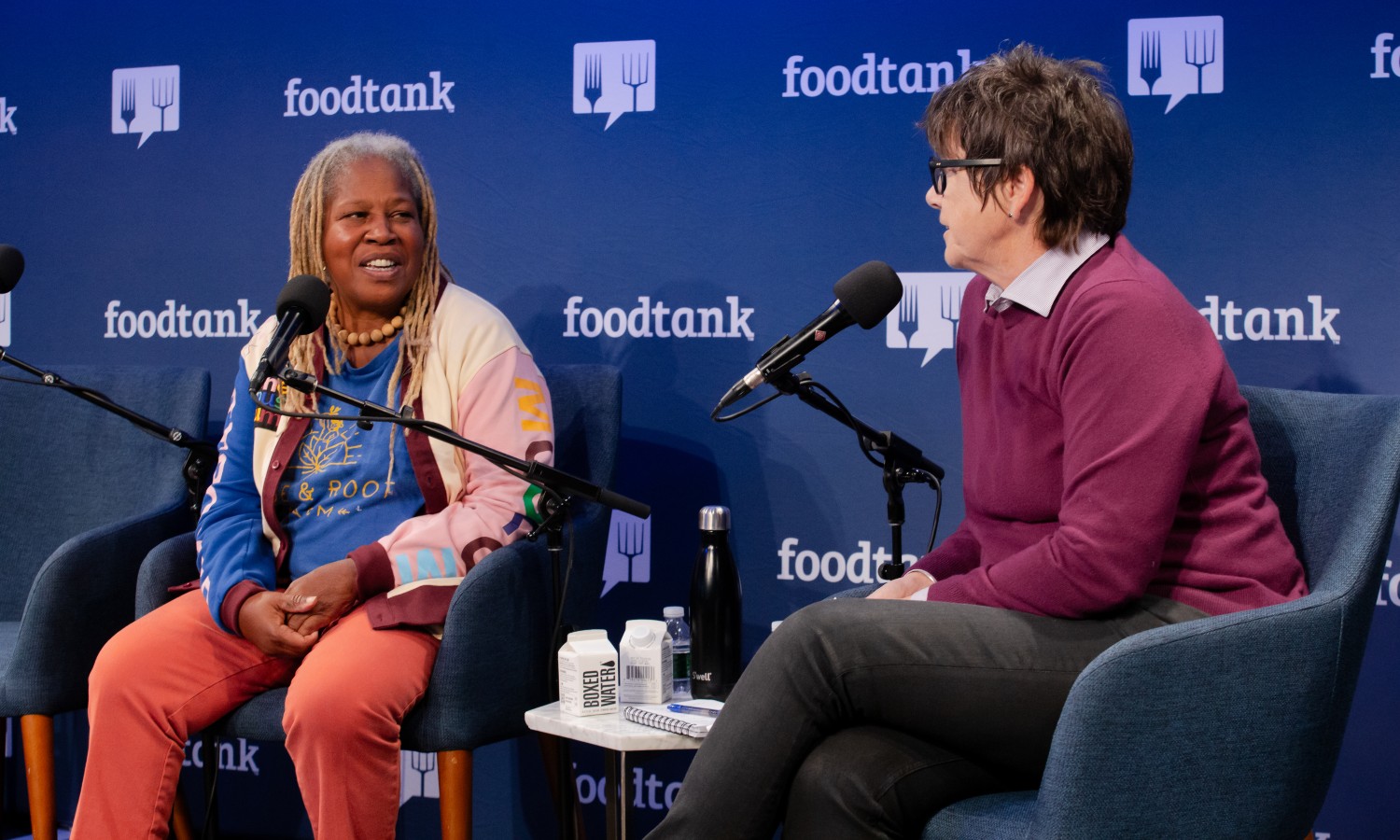

The future of food education is increasingly being described as a whole-system approach that connects classrooms with gardens, farms, kitchens, cafeterias and local communities. At a Future of Food Education summit during Climate Week NYC, educators, farmers, chefs and food-system experts discussed using food to teach subjects ranging from nutrition and science to climate and sustainability. Recent research also suggests that hands-on programs involving gardening, cooking and food-system learning can improve aspects of children’s food literacy, although researchers say more controlled studies are needed. Food Tank
Introduction
🌱 The future of food education may look very different from a traditional lesson about healthy eating. Instead of treating food as a topic limited to lunch menus or nutrition worksheets, educators are increasingly connecting children with the entire food system—from classrooms and school gardens to farms, kitchens, markets and the communities that produce and eat food.
That idea was a central theme of the Future of Food Education Summit, held during Climate Week NYC and presented in partnership with Pilot Light, according to Food Tank’s report published Sept. 28, 2026. Educators, farmers, chefs and other food-system experts discussed how food can become a pathway for teaching children about nutrition, agriculture, climate, sustainability and their own communities.
The discussion comes as schools and education researchers continue to explore how children can develop practical food literacy—the knowledge, skills and confidence needed to understand food, make informed choices and participate in food-related activities.
Recent research adds evidence to the conversation. A 2026 study published in the Journal of Nutrition Education and Behavior found that elementary students participating in the FRESHFARM FoodPrints program showed increases in overall food literacy during the school year, including food-systems and nutrition knowledge and confidence in everyday food skills. However, the researchers also noted that future controlled studies are needed to better understand the relationship between the program and those outcomes. ScienceDirect
What Happened?
The latest conversation around the future of food education centers on a simple idea: children can learn about food by actually interacting with the systems that produce, prepare and distribute it.
At the Future of Food Education Summit during Climate Week NYC, speakers described food as a teaching tool that can connect multiple subjects.
Alexandra DeSorbo-Quinn, executive director of Pilot Light, said food can be used to teach virtually any subject because it makes learning relevant, according to Food Tank’s account of the summit.
That approach changes the traditional definition of food education.
Instead of limiting lessons to questions such as “Which foods are healthy?”, students can explore:
- Where food comes from
- How crops grow
- How soil supports agriculture
- How food reaches supermarkets
- How meals are prepared
- How nutrition affects the body
- How food waste affects communities
- How agriculture interacts with climate
- How food businesses operate
- How individual choices affect food systems
The result is a more connected form of learning in which food becomes a practical starting point for lessons in science, mathematics, geography, economics, health and environmental studies.
Key Details
Several themes emerged from the current discussion.
- Food can be used across school subjects, rather than being treated as a separate health lesson.
- School gardens provide hands-on learning, allowing children to experience growing, harvesting and caring for food.
- Farms can function as outdoor classrooms, connecting students with agriculture and food production.
- Cooking can build practical food skills, including preparation, confidence and understanding of ingredients.
- Food education can address sustainability, including food waste, soil, biodiversity and food systems.
- Teacher preparation matters. A 2026 study of primary-school teachers in Tamil Nadu found that teacher capacity and institutional support were important issues in implementing food and nutrition education. Frontiers
- Research is increasingly examining food literacy outcomes, rather than assuming that participation in food programs automatically changes children’s behavior. Springer
- Families and communities are part of the learning environment, alongside schools, farmers, food-service workers and other participants in the food system. FAOHome
Background: What Is Food Education?
Food education is broader than nutrition education.
Nutrition education generally focuses on understanding nutrients, dietary patterns and healthy eating.
Food education can include those topics, but it can also examine the wider journey of food.
A child might begin by planting a seed.
Later, that child could learn what a plant needs to grow, measure its development, identify the edible portion, harvest it, prepare it and discuss how food waste can be reduced.
One activity can therefore connect several areas of learning.
The Food and Agriculture Organization of the United Nations describes school food and nutrition programs as potentially involving healthy meals, food and nutrition education, healthier food environments and links to local agriculture. FAOHome
The FAO also promotes a whole-school approach, involving children, families, teachers, school staff, farmers, food-service workers, vendors and government actors.
This is important because children do not learn about food only during a classroom lesson.
They encounter food at home, at school, in stores, at restaurants, in gardens and through media.
A successful food-education program therefore has to recognize the environment surrounding the child.
From the Classroom to the Farm
A growing number of programs are trying to close the distance between children and agriculture.
That distance can be surprisingly large.
For many children, the first place they regularly encounter vegetables and other foods is a supermarket rather than a farm or garden.
Farm visits and school gardens can make the production process visible.
A child who plants a tomato seed, waits for it to grow and eventually harvests a tomato experiences something that a textbook cannot completely reproduce.
The child can see the relationship between soil, water, sunlight, time and food.
The Sustainable Food Trust has recently highlighted the use of working farms and urban farms as learning environments in the United Kingdom, arguing that practical experiences can help reconnect children with where food comes from. Sustainable Food Trust
In the United States, California’s Farm to School program similarly connects schools with local producers while supporting food education in classrooms, gardens and on farms. Governor of California
The idea is not simply to teach children how to grow vegetables.
It is to use agriculture as an educational context.
Research: Do Hands-On Food Programs Work?
Evidence is growing, but it needs to be interpreted carefully.
A 2026 study published in the Journal of Nutrition Education and Behavior examined students participating in the FRESHFARM FoodPrints program.
The program integrates gardening, cooking and nutrition education into curriculum-based lessons for students from prekindergarten through fifth grade at partner schools.
Researchers collected food-literacy measurements from fourth- and fifth-grade students during the 2024–25 school year.
About 545 students completed the initial survey, while approximately 556 completed the later survey.
The researchers reported a significant increase in overall food literacy, as well as improvements in food-systems and nutrition knowledge and confidence in everyday food skills.
But the researchers did not present the findings as proof that every food-education program will produce the same results.
They specifically said future controlled research is needed to better understand the dose-response relationship between food education and food literacy.
That qualification matters.
Hands-on learning is promising, but individual programs can differ significantly in curriculum, duration, resources, teacher training and student population.
Food Education Is Also About Climate and Sustainability
Food connects directly to environmental questions.
Children can learn about:
- Soil health
- Water use
- Biodiversity
- Crop production
- Food miles
- Food waste
- Composting
- Seasonal foods
- Sustainable agriculture
- Local food systems
A 2026 youth-led education project in India and Europe, for example, included student research on sustainable food systems, food miles, food waste and composting. One project compared the food miles of everyday products in Pune and Amsterdam and examined household sustainability practices. Education for Climate Coalition
These projects demonstrate another important development: children can move from simply learning about sustainability to investigating real-world systems.
That can make environmental education more concrete.
Instead of telling a child that food waste is a problem, a teacher can ask the class to measure how much food is thrown away during a week.
Instead of simply explaining composting, students can examine what happens to organic waste.
Instead of discussing biodiversity only through pictures, students can observe insects, plants and soil organisms in a school garden.
What Organizations and Educators Are Saying
The Food Tank summit brought together educators, farmers, chefs and other experts to discuss how food can become a broader educational pathway.
Pilot Light, an organization focused on food education, has developed what it describes as the United States’ first Food Education Standards. The standards are intended to provide common benchmarks for teaching about food systems and using food as a pathway for broader learning.
Taylor Meredith, an education policy adviser at Pilot Light, described the standards as a common language for educators, according to Food Tank’s report.
Harlem Grown’s Chief Program Officer Shanon Morris also emphasized the role children can play in creating change within food systems, according to the summit report.
Other summit participants highlighted school gardens as spaces where children can develop relationships and shared experiences around food.
The FAO’s broader guidance supports a similar direction. Its school-food framework says effective food education can involve students, families, educators, farmers and other parts of the food system rather than treating the classroom as an isolated environment.
The Teacher Challenge
One of the biggest barriers may not be the lack of interest from students.
It may be the capacity of teachers and schools.
A peer-reviewed 2026 study in Frontiers in Nutrition examined food and nutrition education in 12 government primary schools in Tamil Nadu, India, surveying 427 teachers.
The researchers found that implementation of food and nutrition education remained uneven and identified teacher capacity, training and institutional support as important factors affecting implementation. Frontiers
This highlights a practical problem.
Adding food education to a curriculum is not enough if teachers do not have:
- Training
- Appropriate teaching materials
- Time
- Access to gardens or kitchens
- Administrative support
- Community partnerships
- Funding
- Opportunities for professional development
The study specifically examined how teachers’ confidence and school support affect their ability to turn policy goals into classroom practice.
For the future of food education, teacher preparation may therefore be just as important as the curriculum itself.
Why This Matters for Children
Food is something every child encounters.
That makes it an unusually accessible educational tool.
A child may not immediately see the relevance of an abstract lesson about supply chains.
But asking how a banana traveled from a farm to a local store can introduce geography, transportation, economics, agriculture and environmental questions in a single discussion.
Cooking can introduce measurement and fractions.
Gardening can introduce biology.
Comparing food prices can introduce mathematics.
Reading a food label can introduce literacy and health.
Tracking food waste can introduce data collection and environmental science.
This cross-disciplinary quality is one reason educators are increasingly interested in food as a learning pathway.
The systematic review published in 2026 found that school-based food-literacy interventions have included cooking, food preparation, taste testing, gardening, harvesting, farm visits, food labeling, nutrition, food waste and media literacy.
The review found reported improvements across several areas in the literature, including food knowledge, cooking confidence, gardening skills, food-system knowledge and nutrition knowledge. However, it also found that some interventions did not improve certain outcomes, demonstrating that results are not uniform across all programs.
Food Education Can Start at Home
Schools are not the only place where children can develop food literacy.
Parents can incorporate food education into ordinary routines without creating a formal lesson.
For younger children, simple activities might include:
- Washing fruits and vegetables
- Sorting foods by color
- Counting ingredients
- Helping measure flour or water
- Planting herbs
- Watching seeds germinate
- Identifying fruits and vegetables
- Discussing where foods come from
- Helping prepare simple meals
- Learning about reducing food waste
Older children can take on more responsibility.
They can help plan a meal, compare prices, read ingredient lists, calculate quantities or learn basic cooking and food-safety skills.
These activities can make food education practical rather than theoretical.
What Happens Next?
The future direction of food education will likely depend on how effectively schools can integrate these activities into existing education systems.
The FAO has called for stronger school-based food and nutrition education and emphasizes the need for appropriate policies, institutional capacity and coordination among different parts of the food system.
Research is also continuing.
The 2026 systematic review of child food literacy identified a large body of school-based research but also highlighted the need to understand how interventions work across different settings and populations.
In India, the recent research from Tamil Nadu points to teacher capacity as an important part of translating food and nutrition policy into actual classroom practice.
Meanwhile, programs in countries including the United States, United Kingdom and Australia continue to connect schools with farms, gardens and food producers.
The next stage may therefore be less about creating a separate “food class” and more about making food a useful pathway through the existing curriculum.
The Bigger Picture
The future of food education is increasingly being framed as a connection rather than a single subject.
The classroom can teach children the science behind growing food.
The garden can demonstrate that science in practice.
The farm can show how agriculture works.
The kitchen can turn ingredients into meals.
The cafeteria can demonstrate food choices and food environments.
The community can show children how farmers, businesses, families and institutions all contribute to the food system.
That approach also changes the role of the child.
Instead of being only a consumer of food, the child becomes someone who can understand where food comes from, how it is produced, how it affects health and how food systems affect the environment.
There is still no evidence that one particular model is universally best for every school.
Resources, geography, culture and local food systems vary widely.
But the evidence and current educational initiatives point toward a common direction: food education is becoming more experiential, interconnected and community-oriented.
The farm and the classroom are no longer necessarily separate learning environments.
For many educators, they are becoming two parts of the same lesson.
FAQs
1. What is the future of food education?
The future of food education is increasingly focused on connecting classroom learning with practical experiences such as gardening, cooking, farm visits, school meals and community food systems.
2. Why should children learn where food comes from?
Learning where food comes from can help children understand agriculture, nutrition, food systems and sustainability. Hands-on activities can also develop practical food-related skills.
3. What is farm-to-school education?
Farm-to-school education connects schools with agriculture and local food producers. Programs can include farm visits, school gardens, locally sourced school meals and classroom lessons about food and farming. Governor of California
4. Does food education improve children’s food literacy?
Research suggests that some school-based food-education programs can improve aspects of children’s food literacy. A 2026 FoodPrints study reported increases in overall food literacy, food-systems and nutrition knowledge, and confidence in everyday food skills. More controlled research is still needed.
5. What can children learn from a school garden?
A school garden can support lessons involving plant biology, soil, nutrition, food systems, sustainability, measurement and food preparation. It can also give children direct experience with growing and harvesting food.
6. Why is teacher training important for food education?
Teachers need appropriate knowledge, confidence, resources and institutional support to incorporate food and nutrition education effectively. A 2026 study of teachers in Tamil Nadu identified teacher capacity and school-level support as important implementation issues.
7. Can food education teach subjects other than nutrition?
Yes. Food can provide examples for science, mathematics, geography, economics, literacy, environmental studies and social learning. Educators at the Future of Food Education Summit specifically discussed using food as a pathway to broader classroom learning.
8. How can parents teach food literacy at home?
Parents can involve children in age-appropriate activities such as gardening, cooking, measuring ingredients, reading food labels, planning meals and discussing food waste. These everyday experiences can complement formal school education.