
The best gifts for toddlers in 2026 include building blocks, chunky puzzles, interactive story toys, board books, musical instruments, pretend-play sets, ride-on toys and sensory activities. In an October 8, 2026, gift guide, TODAY’s Shop editors consulted Marissa Silva, editor-in-chief of The Toy Insider, and highlighted toys intended to support skills such as movement, language, imagination and fine motor development. Parents should select gifts according to a child’s age, abilities and interests, with particular attention to choking hazards and other toy-safety risks.
The Best Gifts for Toddlers This Year, According to Editors and Toy Experts
Introduction
Finding the best gifts for toddlers can be challenging because children between the ages of 1 and 3 develop rapidly and often have very different interests. One toddler might enjoy stacking blocks and turning pages in a picture book, while another prefers musical toys, pretend cooking or running around outdoors. A thoughtful gift should match the child’s current abilities and provide opportunities to explore, play and learn.
On October 8, 2026, TODAY published its shopping guide, The Best Gifts for Toddlers This Year, According to Editors and Toy Experts. Written by Sierra Hoeger and Emma Stessman, the guide draws on advice from Marissa Silva, editor-in-chief of The Toy Insider, alongside the writers’ toy coverage and editorial selections. It also includes products recognized in Shop TODAY’s first-ever Toy Awards.
The recommendations cover different types of play, including building, storytelling, music, movement and imaginative activities. Other 2026 gift guides, including Parents magazine’s toddler toy selection published on October 7, also emphasize toys that encourage motor skills, pretend play, creativity and emotional learning.
For families choosing a birthday present, holiday gift or everyday surprise, the wider lesson is that a toddler does not necessarily need an expensive electronic toy. Well-chosen books, simple building toys, safe pretend-play accessories and opportunities to move can all offer meaningful play experiences.
What Happened? A New Toddler Gift Guide Highlights Play and Development
TODAY’s October 2026 guide brings together gift suggestions for children roughly 1 to 3 years old. Its approach combines age-based recommendations with categories such as educational play, comfort, audio entertainment, books and active toys.
The guide identifies several featured choices, including The Very Hungry Caterpillar book by Eric Carle, Learning Resources Hoot the Fine Motor Owl, the Toniebox 2 Starter Set Bundle and the Ms. Rachel My First Learning Farm Playset. These products serve different purposes, from shared reading and hands-on manipulation to listening and interactive play.
The article also includes toys that have received awards within the publication’s shopping coverage. These awards are editorial recognitions, not proof that every child will enjoy a product or that a toy is necessary for healthy development.
A separate 2026 guide from Parents highlights stacking toys, wooden puzzles, pretend-play sets, musical toys, movement-based activities and products designed to help children recognize emotions. Taken together, the guides show the range of play experiences families may consider when selecting a toddler gift.
However, neither a product’s popularity nor an award should replace checking the manufacturer’s recommended age, instructions and safety information.
Key Details: Gift Ideas Worth Considering in 2026
The following categories provide a practical way to narrow down options. They are general recommendations, not a claim that every item has been independently tested or endorsed by a particular expert.
1. Building blocks and stacking toys
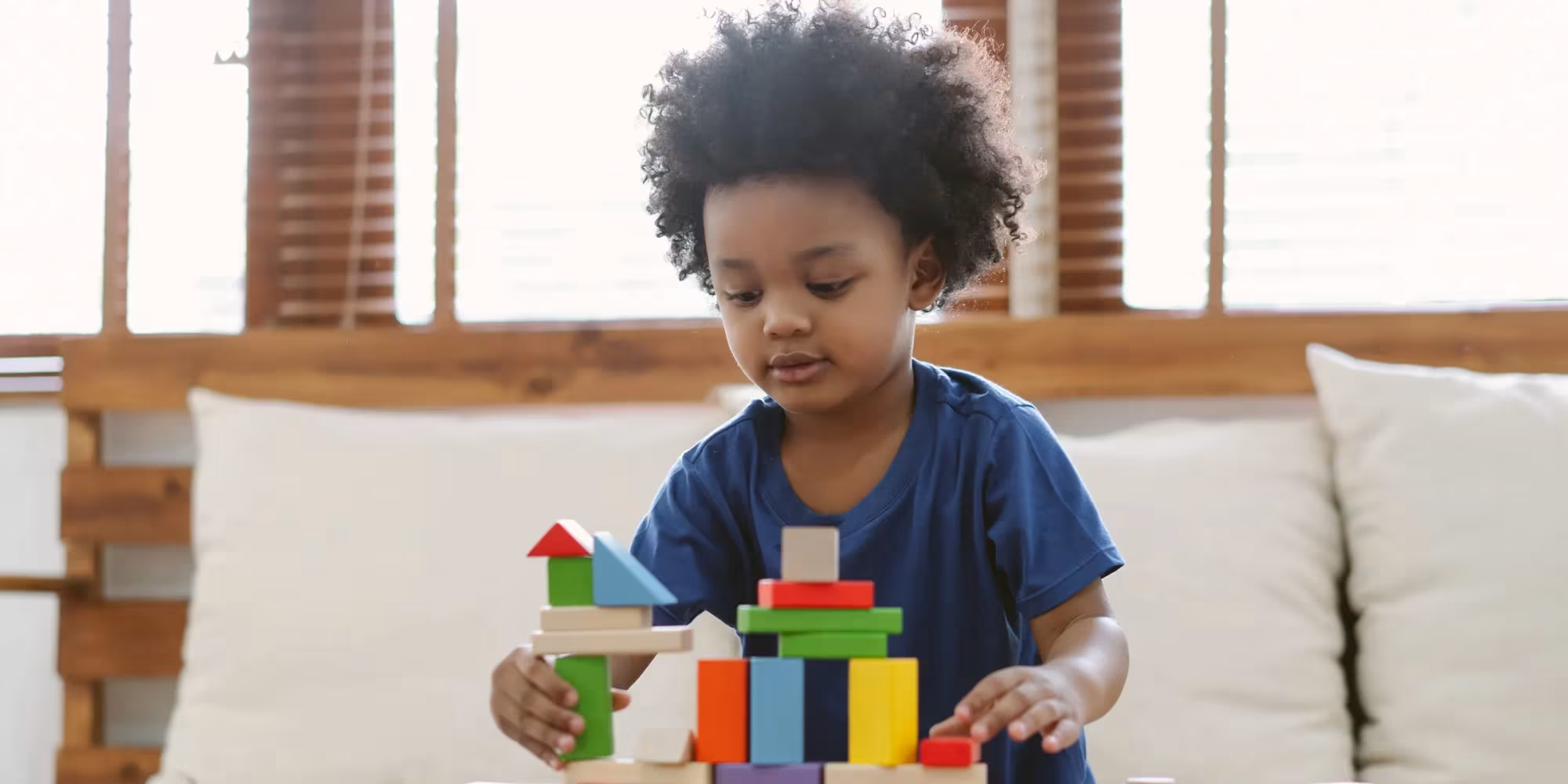
Large building blocks are versatile gifts because toddlers can stack, knock down, sort and rearrange them. These activities give children opportunities to experiment with balance, size, shapes and cause and effect.
Stacking toys can also encourage persistence. When a tower falls, a child can try again and discover how different arrangements change the result.
Choose sturdy pieces that are appropriate for the child’s age. Avoid sets containing small components or parts that can break off.
2. Chunky puzzles and shape sorters
Simple wooden puzzles with large, easy-to-grip pieces can help toddlers practise hand-eye coordination and problem-solving. Pictures of familiar animals, vehicles, foods or household objects may also give adults opportunities to introduce new words.
Shape sorters offer another hands-on activity. Children can experiment with fitting shapes into matching openings and learn through trial and error.
For younger toddlers, select puzzles with large pieces and a manageable number of shapes rather than complicated designs.
3. Picture books and interactive storytelling
Books are practical gifts because they can become part of a child’s daily routine. Board books, animal stories, lift-the-flap books and picture books about familiar activities can support shared reading.
Adults can point to illustrations, name objects, ask simple questions and encourage toddlers to make animal sounds. Children do not need to read independently to benefit from an engaging story experience.
TODAY’s gift guide includes The Very Hungry Caterpillar, a well-known picture book by Eric Carle. It is one example of a book-based gift, rather than a guarantee that every toddler will prefer the same story.
4. Pretend-play toys
Pretend play becomes increasingly interesting during the toddler years. Children may imitate everyday activities such as cooking, talking on a phone, caring for a doll or driving a toy vehicle.
Suitable gifts include a sturdy play kitchen, large toy food, dolls, stuffed animals and simple role-play accessories. These toys give children opportunities to create their own scenarios and practise everyday words.
The American Academy of Pediatrics explains that pretend-play materials can help young children use words and stories to imitate, describe and make sense of real-life experiences. The value often comes from how children and caregivers use the toys together, not from the number of features a product offers.
5. Musical and audio toys
Musical toys can make play interactive. A toddler-safe drum, xylophone designed for the intended age group, simple shaker or toy piano may encourage children to experiment with rhythm and sound.
Audio storytelling products offer another option for families who want listening experiences without relying entirely on a screen. The Toniebox 2 Starter Set Bundle appears among TODAY’s featured gift suggestions.
Before purchasing an electronic or audio toy, consider volume controls, durability, battery access and whether its content suits the child. A simple instrument may be just as engaging for a toddler who enjoys making sounds independently.
6. Toys that encourage movement
Toddlers learn through movement as well as quieter activities. Push toys, soft balls, play tunnels and suitable ride-on toys can encourage children to walk, crawl, kick, chase or practise balance.
The Parents 2026 toddler guide includes movement-oriented options, such as an interactive crawling toy and a beginner scooter. These examples illustrate the variety of active-play gifts available, but each product’s recommended age and instructions should be checked before use.
For outdoor toys, consider the available space, the child’s coordination and the need for adult supervision. Riding toys should be used with appropriate protective equipment, including a correctly fitted helmet where applicable.
7. Fine motor and hands-on learning toys
Fine motor activities involve the small movements children use to grasp, manipulate and coordinate objects. Suitable toys may include large stacking pieces, easy-grip puzzles, toddler activity boards and simple posting or sorting games.
TODAY’s guide includes Learning Resources Hoot the Fine Motor Owl, presented as a fine-motor gift option. When considering a similar toy, look at whether the pieces are easy to handle and whether the activity matches the child’s current skills.
A child should be able to explore without becoming overwhelmed by too many steps or complicated instructions. An adult can demonstrate the activity and then let the toddler experiment.
8. Comfort items and soft toys
A soft doll or stuffed animal may appeal to a toddler who enjoys cuddling, carrying toys around or including a familiar character in pretend play.
TODAY’s guide features Hugimals Hugarounds Ollie the Orangutan as a comfort-oriented option. The presence of a comfort toy in a shopping guide does not establish that it treats anxiety or any medical condition; it is simply one possible gift for a child who enjoys soft companions.
Check labels, stitching, attached decorations and cleaning instructions. Make sure the toy is appropriate for the child’s age and does not contain detachable parts that could become a choking hazard.
9. Art and sensory activities
For toddlers who like exploring textures and colors, age-appropriate art materials and sensory activities can be appealing gifts. Examples include large washable crayons, chunky paper, supervised finger-painting materials and simple texture books.
Choose products specifically labelled for young children and follow all use instructions. Art activities require adult supervision, and materials should never be assumed safe to eat simply because they are marketed to children.
For children who prefer movement over sitting at a table, sensory play can also involve water play with suitable cups, outdoor exploration or handling safe household objects under supervision.
10. Experience-based gifts
Not every useful present needs to be a physical toy. A trip to a child-friendly park, a visit to a library story session, an age-appropriate music activity or a planned day exploring nature can create opportunities for interaction and discovery.
Experience gifts can be particularly useful when a family already has plenty of toys or limited storage space. The best choice depends on the child’s interests, accessibility and the caregiver’s schedule.
A simple shared activity may also be easier to adapt to a child’s changing abilities than a toy with a narrow purpose.
Background: What Toddlers Need From Play
The toddler years include substantial changes in communication, movement, social interaction and problem-solving. Children gradually become more interested in doing things independently, copying adults and exploring how objects work.
The U.S. Centers for Disease Control and Prevention (CDC), in its guidance for toddlers aged 2 to 3 years, describes milestones involving how children play, learn, speak, behave and move. These milestones provide broad developmental context, not a shopping checklist. Children develop at different rates, and a toy should not be treated as a way to force a child to reach a milestone.
The American Academy of Pediatrics (AAP) similarly advises parents to choose toys that fit a child’s developmental skills and abilities while encouraging new skills. Its guidance discusses traditional play materials, including toys for pretend play, as useful tools for learning and interaction.
These principles help explain why a balanced toy collection can be more useful than a room full of complicated electronic products. Blocks, books, puzzles, pretend-play objects and active toys each offer different ways to engage.
Caregiver participation matters, too. Reading together, naming objects, taking turns and joining a child’s pretend game can make an ordinary toy more engaging. Toys support play, but they do not replace responsive relationships or individual attention.
What Editors and Organizations Say About Choosing Toys
TODAY’s guide cites Marissa Silva, editor-in-chief of The Toy Insider, who stresses age appropriateness and the need to consider choking hazards for children younger than 3. The article also highlights early skills that toys may support, including fine and gross motor development, color recognition, matching and early language.
The AAP’s toy-buying guidance recommends selecting toys according to children’s abilities and avoiding unsafe features. It specifically cautions against toys with button batteries or high-powered magnets. Parents should inspect toys carefully and follow the product’s age and safety instructions.
The U.S. Consumer Product Safety Commission (CPSC) provides additional safety guidance. It advises consumers to follow age recommendations, keep small balls and toys with small parts away from children under 3, and remove packaging promptly after opening gifts. U.S. toy regulations also restrict small parts in products intended for children under 3 when those parts create the covered choking, aspiration or ingestion hazards.
These U.S. regulations are relevant to products sold in the United States. Families in other countries should also follow their own local product-safety requirements and check for applicable certification or compliance information.
Why This Matters for Parents and Gift-Givers
A toddler gift can be entertaining while also giving a child opportunities to practise everyday skills. But a higher price, more lights or a longer list of features does not automatically make a toy better.
Parents can make more informed choices by asking three questions:
- Is it appropriate for the child’s age? Check the label and consider the child’s actual abilities, not just their birthday.
- Does it suit the child’s interests? A child who loves books may enjoy a story collection more than a noisy electronic toy.
- Will it offer useful opportunities for play? Toys that can be used in several ways may remain interesting as a child’s play becomes more imaginative.
It is also worth considering practical details such as storage, cleaning, durability and whether an adult needs to help with every use.
For families shopping on a budget, everyday items such as board books, large blocks, simple puzzles and basic art supplies can be worthwhile options when chosen carefully. The AAP emphasizes that expensive toys are not required for children to benefit from play.
What Happens Next?
The October 2026 gift guides from TODAY and Parents offer current editorial starting points for families exploring toddler toys. Their recommendations may help shoppers identify categories and specific products to investigate, but prices, availability and product specifications can change.
Before buying a featured item, confirm its current recommended age, check the manufacturer’s instructions and look for any relevant safety notices or recalls. This is particularly important for products with detachable components, magnets, batteries, cords or moving parts.
There is no single gift that suits every toddler. The most appropriate choice will depend on the child’s age, interests, abilities and the environment in which the toy will be used.
Ultimately, the best gifts for toddlers are those that combine enjoyment with age-appropriate, safe opportunities to explore, move, communicate and imagine.
FAQs
1. What are the best gifts for toddlers in 2026?
Good options include large building blocks, chunky puzzles, board books, pretend-play sets, musical toys, fine-motor activities and age-appropriate toys that encourage movement. The best choice depends on the child’s age, interests and abilities.
2. What are the best gifts for a 1-year-old?
Consider sturdy board books, large stacking cups, simple shape toys, soft toys labelled for the appropriate age and easy-to-grasp play objects. Check carefully for choking hazards and follow the manufacturer’s age guidance.
3. What are the best gifts for a 2-year-old?
Two-year-olds may enjoy simple puzzles, stacking toys, pretend kitchens, toy animals, picture books, large crayons and supervised active-play toys. Choose activities that match the child’s coordination and interests.
4. What are the best gifts for a 3-year-old?
Many 3-year-olds enjoy imaginative play, more involved puzzles, building activities, pretend-play sets, picture storytelling, music and supervised art. Always check whether a product is designed for the child’s age and abilities.
5. Are educational toys necessary for toddler development?
No particular toy is necessary for a child to reach a developmental milestone. The American Academy of Pediatrics recommends developmentally appropriate play materials and emphasizes the value of interaction with caregivers. Everyday play, reading, talking and exploring can also provide learning opportunities.
6. What should parents avoid when buying toddler toys?
Avoid toys with unsafe small parts, accessible button batteries, high-powered magnets or other hazards. Check the recommended age, inspect for loose or broken components, follow safety instructions and supervise play when needed.
7. Are expensive toys better for toddlers?
Not necessarily. A toy’s price does not guarantee that a child will enjoy it or benefit more from it. Simple, durable toys such as books, blocks and age-appropriate puzzles can offer varied opportunities for play.
8. Who published the 2026 guide to the best gifts for toddlers?
TODAY’s Shop team published The Best Gifts for Toddlers This Year, According to Editors and Toy Experts on October 8, 2026. The guide was written by Sierra Hoeger and Emma Stessman and includes advice from Marissa Silva, editor-in-chief of The Toy Insider.