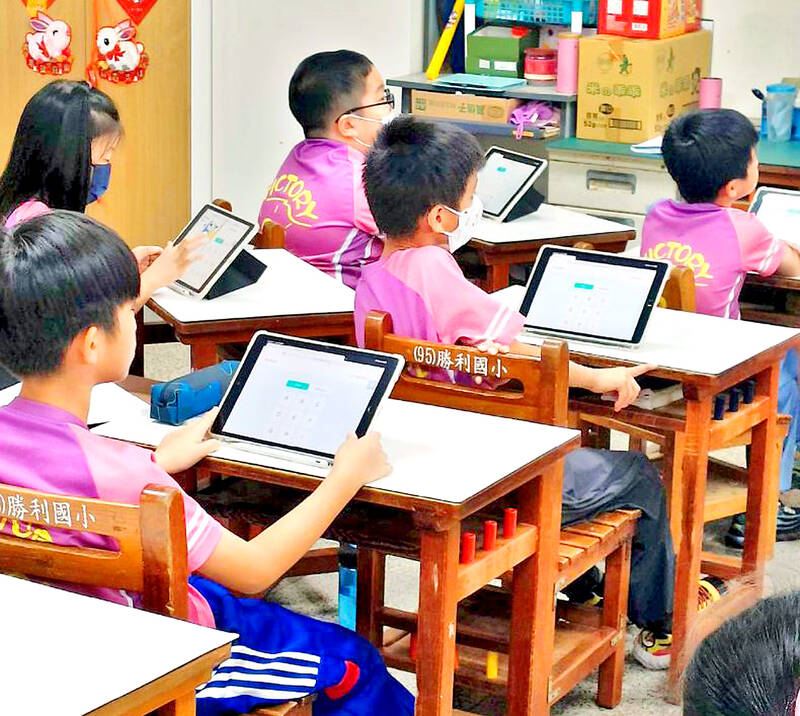

Taiwanese education and health authorities are renewing attention on rising nearsightedness in kids, as a large share of elementary-school students have vision problems and children increasingly use tablets and digital displays at school. A Sept. 28, 2026 report by Taipei Times, citing Ministry of Education data, said 45.13% of elementary-school students were nearsighted in the latest academic year. Officials are promoting regular vision screening, healthier device habits and more outdoor time as part of prevention efforts. Taipei Times
Introduction
The issue of rising nearsightedness in kids is receiving renewed attention in Taiwan, where education officials are encouraging schools and families to take children’s eye health more seriously amid widespread use of tablets, digital displays and other close-up activities.
A Sept. 28, 2026 report by Taipei Times said Ministry of Education data showed that 45.13% of elementary-school students were nearsighted in the latest academic year. The report highlighted concerns that digital learning has become a routine part of school life, with almost every classroom equipped with a digital display and nearly every student using a tablet.
The concern is not limited to Taiwan. The World Health Organization says myopia among children can be influenced by environmental and behavioral factors, including the amount of time children spend outdoors and the amount of near-work they do. The organization recommends strategies such as spending at least 90 minutes outdoors during daylight hours and taking regular breaks from near-work activities. World Health Organization
For parents, the issue is important because myopia is not simply about whether a child needs glasses. More severe myopia can be associated with an increased risk of eye complications later in life, making early detection and appropriate management important.
What Happened?
The latest warning comes as Taiwan continues efforts to address children’s vision problems.
According to the Taipei Times report, Ministry of Education data showed that 45.13% of elementary-school students were nearsighted during the latest academic year. The report said the figure was part of growing concern about children’s eyesight as digital technology becomes increasingly integrated into education.
The situation was also highlighted in Kaohsiung. The city’s Education Bureau reported a nearsightedness rate of 45.91% among elementary-school students, compared with 45.2% two years earlier and 45.34% the year before, according to the report.
Officials said the rate had previously declined gradually but began rising again around the period when students shifted toward online learning during the COVID-19 pandemic.
The concern now is how to balance the educational benefits of digital tools with habits that support children’s long-term eye health.
Taiwan’s Ministry of Education has also continued formal nationwide prevention initiatives. In August 2026, it announced the 12th National Myopia Prevention Education Month, calling on kindergartens and schools to strengthen early prevention, health education and management of high myopia. Ministry of Education
Key Details
Several points stand out from the latest development:
- 45.13% of elementary-school students were reported as nearsighted in the latest academic year.
- Kaohsiung’s reported rate was 45.91%, above the national figure cited in the report.
- Schools are increasingly dependent on digital displays and tablets for learning.
- Officials are encouraging children to spend more time outdoors and take regular breaks from close-up work.
- Schools are being encouraged to develop rules governing digital-device use and screen exposure.
- Taiwan’s Ministry of Education launched its 12th National Myopia Prevention Education Month in 2026.
- Taiwan’s National Health Insurance Administration expanded coverage for 0.05% atropine eye drops for eligible children and adolescents under 18 beginning Aug. 1, 2026, as part of myopia-control treatment. NHI Taiwan
Background: Why Is Myopia Increasing Among Children?
Myopia, commonly called nearsightedness, occurs when light focuses in front of the retina rather than directly on it. As a result, nearby objects can appear clear while distant objects become blurry.
Myopia is influenced by both genetic and environmental factors. Having parents with myopia can increase a child’s risk, but genetics alone do not explain the changes being observed across populations.
The U.S. National Eye Institute has noted that researchers are studying the interaction between genetics and environmental influences, including near-work, outdoor light and electronic-device use. It also says the precise contribution of each factor remains an area of research. National Eye Institute
That distinction matters. It would be inaccurate to say that smartphones or tablets alone cause childhood myopia.
Instead, researchers are examining a combination of factors, including prolonged near-focus activities and insufficient outdoor exposure.
The WHO similarly identifies increased outdoor time and reduced near-work as lifestyle approaches that may help delay the onset and slow the progression of myopia in children. World Health Organization
Digital Learning Has Created a New Challenge
Digital technology is now an established part of education.
Tablets can provide access to interactive lessons, educational applications and digital books. Classroom displays can make lessons more visual and interactive.
The concern is not necessarily that children use these technologies at all, but how they use them and what those activities replace.
If digital learning adds substantial close-up time to an already demanding school day, children may have fewer opportunities for outdoor activity and distance viewing.
The latest Taiwanese discussion therefore focuses on developing healthier habits rather than simply eliminating technology from classrooms.
The Kaohsiung Education Bureau said schools were being encouraged to establish guidelines for device use, including procedures for applications and limits on screen exposure.
What Officials and Organizations Said
Taiwanese education officials have emphasized that preventing childhood vision problems requires cooperation among parents, schools and medical professionals.
The Kaohsiung Education Bureau has promoted vision education, screening and healthier digital-device habits. It also encouraged schools to provide opportunities for students to spend time outdoors during breaks.
The bureau has highlighted the importance of prevention and early detection, particularly among younger children.
Taiwan’s Ministry of Education has separately made myopia prevention a recurring national education priority. Its August 2026 announcement called for schools and kindergartens to strengthen prevention efforts, start early and take steps to prevent high myopia.
The WHO’s guidance provides broader medical context. It says children can benefit from spending time outdoors during daylight hours and taking regular breaks during near-work activities.
What Can Parents Do About Rising Nearsightedness in Kids?
Parents do not need to eliminate screens completely to support children’s eye health.
Instead, practical habits can make a difference.
1. Encourage outdoor time
Outdoor activity is one of the most consistently discussed lifestyle measures for reducing the risk of childhood myopia.
WHO guidance says spending at least 90 minutes outdoors during daylight hours may help delay the onset and slow progression of myopia.
Taiwanese officials cited in the latest report have encouraged an even higher target of approximately two hours outdoors per day, or 14 hours per week.
2. Give children’s eyes regular breaks
The commonly promoted 20-20-20 rule recommends looking at something at least 20 feet away for 20 seconds after 20 minutes of close-up work.
The rule is frequently used as a practical reminder to interrupt prolonged near-focus activities. The latest Taiwanese report also cited this approach.
3. Watch for changes in vision
Parents should pay attention if a child:
- Squints when looking at distant objects
- Sits unusually close to the television
- Holds books or screens very close to the face
- Complains that the classroom board is blurry
- Frequently rubs their eyes
- Has difficulty seeing distant objects
- Develops headaches associated with visual tasks
These signs do not automatically mean a child has myopia, but they can justify a professional eye examination.
4. Keep up with vision screening
Routine screening can identify children who may need further assessment.
The WHO notes that refractive errors can generally be corrected with eyeglasses or other appropriate interventions, making detection and treatment important.
5. Follow medical advice if myopia is diagnosed
If a child is diagnosed with myopia, parents should discuss appropriate management with an eye-care professional.
Treatment may involve corrective glasses or contact lenses, while some children may be candidates for treatments intended to slow myopia progression.
Taiwan’s National Health Insurance Administration announced that 0.05% atropine eye drops became covered for myopia control in eligible children and adolescents under 18 from Aug. 1, 2026. The agency said the appropriate concentration should be determined individually according to factors such as age, progression rate and treatment response.
This is a medical treatment and should not be started without guidance from an appropriate eye-care professional.
Why This Matters
The growing attention to childhood myopia matters for two reasons.
First, poor distance vision can affect everyday childhood experiences. A child who cannot clearly see the classroom board, participate comfortably in sports or recognize objects at a distance may face difficulties that are not immediately obvious to parents.
Second, high myopia can carry greater long-term eye-health risks.
The National Eye Institute describes childhood myopia as an important area of international research because prevalence has increased substantially in many populations. Researchers continue to investigate how genetic and environmental factors interact. National Eye Institute
The issue therefore goes beyond reducing today’s screen time. The broader goal is to establish healthier patterns of outdoor activity, near-work breaks, vision screening and appropriate treatment.
What Happens Next?
Taiwan’s prevention efforts are continuing through schools, health agencies and education campaigns.
The Ministry of Education’s 2026 National Myopia Prevention Education Month is intended to reinforce prevention efforts during the school year, particularly among younger students.
Schools are also expected to continue developing policies around digital-device use, while local education authorities are promoting vision screening and eye-health education.
On the healthcare side, Taiwan’s expansion of insurance coverage for low-concentration atropine provides ophthalmologists with another treatment option for eligible children whose myopia requires management.
However, there is no single intervention that can guarantee a child will not develop myopia. Genetics, age, environment and individual behavior all play roles, and researchers continue to study how these factors interact.
For families, the clearest practical message is to combine regular eye checks, outdoor activity, sensible screen habits and timely professional care.
Frequently Asked Questions
What is myopia in children?
Myopia, or nearsightedness, is a refractive condition in which distant objects appear blurry while nearby objects can remain clear. It commonly develops during childhood or adolescence.
Is nearsightedness increasing among kids?
Yes. Childhood myopia has increased substantially in many populations around the world. Taiwan continues to monitor the problem through school vision data and national prevention programs.
Does screen time cause myopia in children?
Screen use is one factor being studied, but it is not accurate to say screens alone cause myopia. Researchers are examining the combined effects of near-work, outdoor exposure, genetics and other environmental factors. National Eye Institute
How much outdoor time should children get?
WHO guidance says that spending at least 90 minutes outdoors during daylight hours may help delay the onset and slow the progression of myopia. Taiwanese officials cited in the latest report have encouraged around two hours per day.
What is the 20-20-20 rule?
The 20-20-20 rule is a simple break strategy: after about 20 minutes of close-up work, look at something around 20 feet away for at least 20 seconds.
What are signs that a child may be nearsighted?
Possible signs include squinting, sitting close to screens or television, holding objects very close, difficulty seeing the classroom board and complaints about blurry distance vision.
Can childhood myopia be treated?
Yes. Corrective glasses and contact lenses can improve vision. For some children, eye-care professionals may also recommend treatments intended to slow myopia progression. The appropriate approach depends on the child’s individual condition.
Should parents stop children from using tablets?
Not necessarily. Digital learning can be useful, but children should have regular breaks from close-up work and sufficient outdoor activity. Schools and parents can focus on balanced and healthy device habits rather than assuming all digital learning is harmful.