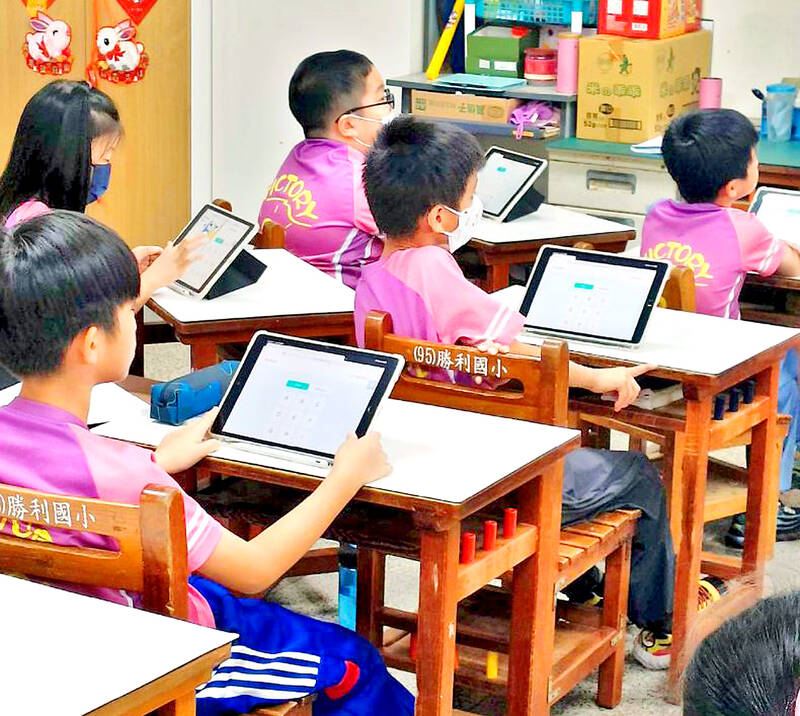

Taiwan’s Ministry of Education has warned about rising nearsightedness in kids, with ministry data showing that 45.13% of elementary-school students were nearsighted in the latest academic year. The warning comes as digital learning becomes widespread in schools, with almost every classroom equipped with a digital display and nearly every student having access to a tablet. Officials and eye specialists are encouraging regular vision checks, breaks from close-up work and about two hours of outdoor activity each day.
Introduction
A growing number of children in Taiwan are being diagnosed with nearsightedness, prompting renewed concern from education and health officials about children’s vision in an increasingly digital learning environment.
Taiwan’s Ministry of Education data showed that 45.13% of elementary-school students were nearsighted during the latest academic year, meaning roughly one in every 2.2 elementary students had myopia. The figure was highlighted amid concerns about the amount of time children spend using digital learning devices at school and at home.
The issue is particularly relevant because digital technology has become deeply integrated into Taiwan’s classrooms. According to the report, almost every classroom has a digital display and nearly every student has a tablet.
Officials are therefore emphasizing prevention, early detection and healthier habits rather than simply focusing on treating vision problems after they appear.
The concern is not limited to Taiwan. The World Health Organization has also identified childhood myopia as an important eye-health issue and says that increased outdoor time and reduced near-work exposure can help delay the onset or progression of myopia in children.
What Happened?
The warning follows the release of the latest education data showing that 45.13% of Taiwan’s elementary-school students were nearsighted.
The Ministry of Education raised the issue as schools increasingly rely on digital technology for teaching and learning. The widespread availability of tablets and classroom displays means that children may spend substantial amounts of time looking at material at relatively short distances.
The problem has also been highlighted at the local level.
In Kaohsiung, the Education Bureau reported that 45.91% of elementary-school students were nearsighted, slightly above the national figure. The local rate was 45.2% two years earlier and 45.34% the year before that.
The Kaohsiung Education Bureau said the rate had declined gradually before the COVID-19 pandemic but increased again as students shifted toward online learning.
Officials are now promoting eye-health education, vision screening and healthier use of digital devices.
Key Details
The latest warning includes several important points:
- 45.13% of elementary-school students nationwide were nearsighted in the latest academic year, according to Ministry of Education data.
- Kaohsiung recorded a slightly higher rate of 45.91%.
- Almost every classroom in Taiwan is equipped with a digital display, while nearly every student has access to a tablet, according to the report.
- Kaohsiung officials are encouraging students to spend two hours outdoors each day.
- The local education authority recommends resting the eyes for 10 minutes after 30 minutes of screen use.
- An ophthalmologist quoted in the report recommended the 20-20-20 rule: after 20 minutes of close-up work, look at something at least 20 feet, or about 6 metres, away for at least 20 seconds.
- WHO guidance also recommends at least 90 minutes outdoors during daylight hours as a measure that may help delay the onset or slow progression of childhood myopia.
What Is Myopia or Nearsightedness?
Myopia, commonly called nearsightedness, is a refractive condition in which distant objects appear blurry while nearby objects can generally be seen more clearly.
It commonly develops during childhood and may progress as the eye grows.
A child with myopia might be able to read a book comfortably but struggle to see writing on a classroom board, recognize people at a distance or read signs across a playground.
Myopia can generally be corrected with prescription eyeglasses or other appropriate optical interventions. WHO describes eyeglasses as the most common intervention for correcting refractive errors.
The concern with childhood myopia is not simply whether a child needs glasses. Higher levels of myopia are associated with an increased risk of serious eye complications later in life, which is why early detection and management are important.
Why Are Officials Concerned About Digital Learning?
Digital learning itself should not automatically be considered the cause of childhood myopia.
The important issue is near work.
Children may spend extended periods focusing on tablets, phones, computers, books or other objects held relatively close to the eyes. WHO identifies prolonged near-work activities and reduced outdoor time as risk factors associated with childhood myopia.
This means the discussion is broader than simply asking whether screens are harmful.
A child who spends an hour reading a book at very close range is also performing near work. Similarly, a child who spends an hour looking at a tablet is performing near work.
The overall balance between close-up activities, breaks and outdoor time matters.
At the same time, digital devices have legitimate educational uses, particularly in modern classrooms. The challenge for schools and families is therefore to create healthy routines rather than eliminate technology altogether.
Background: Myopia Has Been a Growing Global Concern
The rise in childhood myopia is not unique to Taiwan.
WHO reports that myopia has become increasingly common in many parts of the world, particularly in East and Southeast Asia. The organization identifies a combination of genetic and environmental factors as relevant to myopia risk.
Children with parents who are nearsighted may have a higher risk of developing myopia. However, genetics is only part of the picture.
Lifestyle and environmental factors, including the amount of time children spend outdoors and the amount of near work they perform, also matter.
Taiwan has been addressing childhood myopia for years.
Earlier Taiwanese prevention programs promoted outdoor activity and healthier visual habits. Research on Taiwan’s schoolchildren has also examined whether increasing outdoor exposure can influence trends in childhood vision.
The country’s health authorities continue to promote childhood vision screening and early management.
Taiwan Has Also Expanded Myopia Treatment Coverage
The concern about childhood myopia is occurring alongside changes to Taiwan’s healthcare policy.
Taiwan’s National Health Insurance Administration (NHIA) announced that, beginning August 1, 2026, 0.05% atropine eye drops were added to national health insurance coverage for myopia control in children and adolescents under 18.
The agency estimated that approximately 365,000 children and adolescents with myopia could benefit from the expanded coverage.
The NHIA previously included 0.01% atropine in its coverage beginning in May 2023.
The agency said low-concentration atropine can help slow myopia progression and that the appropriate concentration should be determined individually according to factors such as age, progression rate and treatment response.
This is important because treatment for existing myopia is different from preventing its initial development.
Parents should not use atropine eye drops for a child without medical advice. Decisions about myopia-control treatment should be made by an eye-care professional.
What Officials and Organizations Said
The Kaohsiung Education Bureau said prevention should focus particularly on younger children.
Its physical education and healthcare division director, Yen Min-su, said children who remain non-myopic through the middle of elementary school are less likely to develop myopia later, according to the Taipei Times report.
The bureau is promoting:
- Eye-health education
- Vision screening
- Healthier digital-device use
- Outdoor activities
- Limits on screen exposure
- Earlier detection and follow-up care
The bureau also said schools should establish guidelines for digital-device use, including procedures for device use and measures to limit screen time.
WHO independently recommends increasing outdoor time and taking regular breaks during near-work activities as measures that may help delay the onset and slow progression of myopia.
Why This Matters for Parents
The Taiwan data provide a practical reminder for parents: children’s vision should be monitored as part of routine health care, particularly when they spend significant amounts of time on close-up activities.
Parents can watch for changes in a child’s behavior.
Possible signs that a child is having difficulty seeing clearly at a distance include:
- Squinting when looking at distant objects
- Moving closer to the television or screen
- Sitting unusually close to classroom displays
- Difficulty seeing writing on a board
- Frequent eye rubbing
- Complaints of headaches or eye fatigue
- Difficulty concentrating on visually demanding tasks
Taiwan’s official child-health material also lists behaviors such as squinting, holding reading material too close, difficulty seeing words on a blackboard and headaches or eye discomfort among signs that warrant attention.
These symptoms do not prove that a child has myopia. An eye examination is needed for diagnosis.
Why Outdoor Time Is Important
One of the most consistent recommendations from eye-health authorities is to give children more opportunities to spend time outdoors during daylight.
WHO says that spending at least 90 minutes outdoors during daylight hours may help delay myopia onset or slow its progression.
The exact biological mechanism is still being studied.
Researchers believe exposure to brighter outdoor light may influence eye growth, but myopia is a complex condition involving genetic and environmental factors.
Outdoor activity should therefore not be presented as a guaranteed way to prevent myopia.
Instead, it is one practical component of a broader approach that includes appropriate vision care and healthy visual habits.
The 20-20-20 Rule Explained
The 20-20-20 rule is frequently recommended as a simple way to break up prolonged near work.
The principle is:
Every 20 minutes → look at something at least 20 feet away → for at least 20 seconds.
The rule is intended to encourage regular changes in focusing distance during prolonged close-up work.
The ophthalmologist quoted by the Taipei Times recommended this approach for children.
However, parents should understand that taking breaks is not a substitute for an eye examination when a child has persistent vision problems.
What About Screen Time?
The evidence does not justify saying that every minute of screen use causes myopia.
The more established concern is the combination of prolonged near work and insufficient outdoor time.
WHO specifically identifies prolonged near activities, including device use and reading, alongside reduced outdoor exposure as relevant risk factors.
For families, a practical approach can include:
- Encourage regular breaks during close-up activities.
- Avoid unnecessary continuous screen sessions.
- Encourage outdoor play during daylight.
- Keep reading and digital devices at a comfortable viewing distance.
- Follow the child’s prescribed glasses routine if myopia has already been diagnosed.
- Arrange professional eye examinations when concerns arise.
What Happens Next?
Taiwan’s education authorities are continuing to promote eye-health education, vision screening and healthier digital-device habits in schools.
Kaohsiung officials said they are also strengthening digital-device management by asking schools to establish usage guidelines and limit screen exposure where appropriate.
At the national healthcare level, the expansion of NHI coverage for 0.05% atropine provides another treatment option for eligible children and adolescents with myopia.
The broader challenge will be balancing the educational benefits of digital technology with children’s need for breaks, outdoor activity and regular eye care.
There is no evidence that simply removing tablets from classrooms would solve childhood myopia. The condition has multiple risk factors, including genetics and the overall visual environment.
What Parents Should Remember
The latest warning does not mean parents should panic about every screen session.
Instead, the evidence supports a balanced approach.
Children need opportunities to learn with technology, but they also need time away from close-up screens and books, regular breaks, outdoor activity and appropriate eye care.
Parents should seek professional evaluation if a child begins squinting, moves unusually close to screens or television, struggles to see distant objects or complains about headaches or visual discomfort.
Early detection matters because childhood myopia can progress during the school years.
FAQs
1. What is the latest rate of nearsightedness among children in Taiwan?
Taiwan Ministry of Education data cited in the September 28, 2026 report showed that 45.13% of elementary-school students were nearsighted in the latest academic year.
2. Why is nearsightedness increasing among children?
Myopia has multiple causes. Genetics can increase risk, while environmental factors such as prolonged near work and insufficient outdoor time are also associated with childhood myopia. Digital devices can contribute to near-work exposure, but screens alone should not be described as the sole cause.
3. How much outdoor time should children get to help protect their eyesight?
WHO says that spending at least 90 minutes outdoors during daylight hours may help delay the onset or slow progression of myopia. Taiwanese officials have promoted a target of approximately two hours outdoors each day.
4. What is the 20-20-20 rule?
The 20-20-20 rule means that after every 20 minutes of close-up work, a child should look at something at least 20 feet, or about 6 metres, away for at least 20 seconds. It is intended to encourage regular breaks from prolonged near work.
5. What are the signs of myopia in children?
Possible signs include squinting, moving closer to a television or screen, difficulty seeing classroom boards or distant objects, frequent eye rubbing and complaints of headaches or eye fatigue. These signs do not confirm myopia; an eye examination is needed.
6. Can children with myopia still use tablets and computers?
Yes. Myopia does not mean that children must completely avoid digital devices. The focus should be on healthy use, including regular breaks, appropriate viewing habits, outdoor activity and professional eye care when needed.
7. Can myopia in children be corrected?
Yes. Refractive errors such as myopia can generally be corrected with appropriate eyeglasses or other optical interventions. WHO identifies eyeglasses as the most common intervention for refractive errors.
8. Has Taiwan introduced treatment support for childhood myopia?
Yes. Taiwan’s National Health Insurance Administration expanded coverage from August 1, 2026, to include 0.05% atropine eye drops for myopia control in children and adolescents under 18. The treatment should be prescribed and monitored by an eye-care professional.