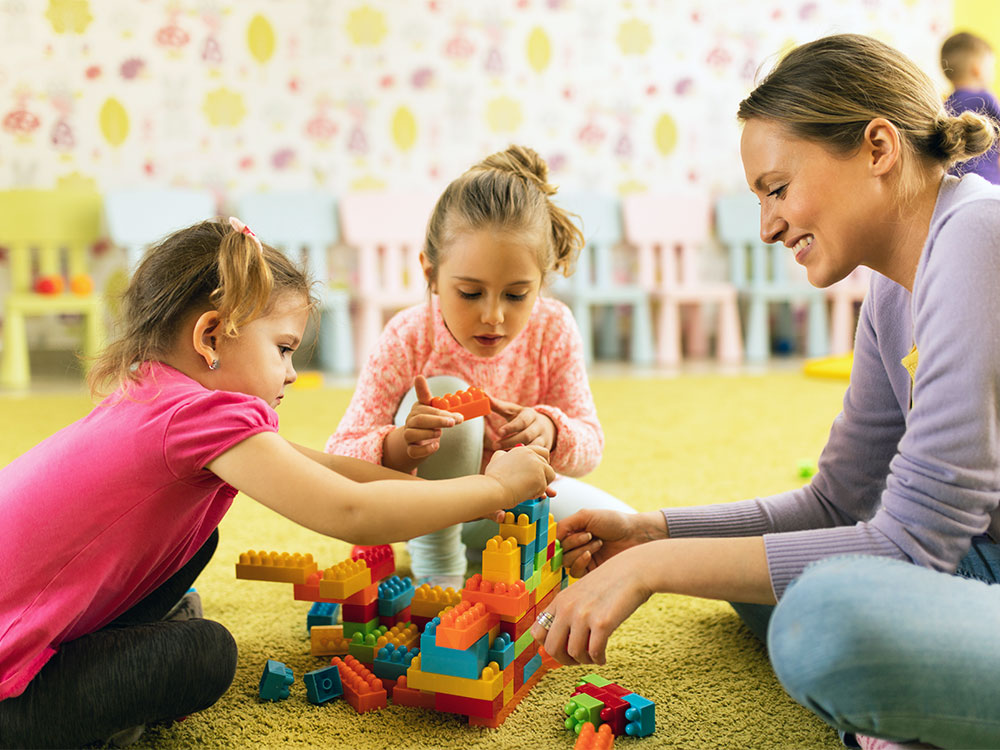

Kids preschool learning games are playful activities designed to help young children learn skills such as language, counting, shapes, colors, memory, coordination, communication and problem-solving. The most useful activities do not have to involve expensive toys or screens; simple games using household objects, stories, songs, movement and pretend play can create meaningful learning opportunities. UNICEF guidance emphasizes that play, exploration, interaction and hands-on activities are central to early learning.
Introduction
For preschool children, learning does not have to look like a traditional classroom lesson. A counting game with blocks, an alphabet hunt around the house, a matching activity with cards, a pretend grocery store or a simple story game can all become learning experiences.
That is why kids preschool learning games have become an important part of play-based early education. These activities allow children to practice emerging skills while doing something that feels natural to them: playing.
UNICEF says that play is an important way young children gain essential knowledge and skills, while effective early-learning environments encourage play, exploration and hands-on learning. UNICEF India similarly describes the early years as a major period of growth and says that play and interaction help support children’s cognitive, language, emotional and social development.
The important point for parents and educators is that a learning game does not need to be complicated. The best activities are often simple, age-appropriate and interactive.
What Are Kids Preschool Learning Games?
Kids preschool learning games are activities that combine play with opportunities to practice developmental or early academic skills.
They can be played at home, in preschool classrooms, outdoors or in small groups. Some require printed materials or toys, while others use objects that families already have.
Examples include:
- Alphabet and letter-recognition games
- Number and counting games
- Shape and color-matching activities
- Memory games
- Sorting games
- Simple puzzles
- Storytelling games
- Rhyming and sound games
- Drawing and tracing activities
- Pretend-play games
- Movement and coordination games
- Observation and scavenger hunts
The goal is not to turn every play session into formal schooling. Instead, children can develop skills naturally while exploring, talking, moving, creating and solving simple problems.
UNICEF’s guidance for parents also encourages activities such as pretend play, conversations about everyday objects, household tasks, stories, songs, rhymes and traditional games as learning opportunities for young children.
What Happened? The Growing Focus on Learning Through Play
There is no single new event behind the phrase “kids preschool learning games.” Rather, it reflects a broader and well-established approach to early childhood education: learning through play.
International early-childhood guidance has increasingly highlighted the value of playful, child-centered learning rather than relying exclusively on formal instruction during the preschool years.
UNICEF’s early-childhood learning resources describe play as one of the important ways children gain knowledge and skills. Its guidance emphasizes environments that allow children to explore, interact and learn through hands-on experiences.
UNICEF India also published guidance in June 2025 encouraging families to use everyday moments for playful learning. For children around ages 3 to 8, the organization recommends activities including pretend play, simple household responsibilities, conversations about the environment, traditional games and local stories, songs and rhymes.
This approach is significant because preschool learning is not limited to recognizing letters and numbers. Children are also developing communication, social interaction, physical coordination, creativity, emotional skills and the ability to solve problems.
Key Details: The Best Preschool Learning Games
1. Alphabet Hunt
An alphabet hunt can turn a room or classroom into a simple learning environment.
Choose one letter and ask the child to find objects that begin with that sound. For example, for the letter “B,” a child might look for a ball, book or bottle.
For younger preschoolers, simply identifying the letter can be enough. Older preschoolers can practice connecting the letter with its sound and words.
Skills supported:
- Letter recognition
- Vocabulary
- Listening
- Beginning phonics
- Observation
2. Counting With Everyday Objects
Counting games do not require special equipment.
Parents can ask children to count blocks, pencils, toy animals, buttons or pieces of fruit. The activity can gradually become more challenging by asking questions such as:
- How many blocks are there?
- Can you give me three?
- Which group has more?
- Which group has fewer?
These simple questions introduce early mathematical thinking.
3. Shape Matching Game
Cut or draw basic shapes such as circles, squares, triangles and rectangles. Then ask children to find objects around them that have similar shapes.
A plate can become an example of a circle. A book may resemble a rectangle.
This connects an abstract concept with the child’s everyday environment.
Skills supported:
- Shape recognition
- Visual discrimination
- Vocabulary
- Observation
- Early geometry concepts
4. Color Sorting
Give children objects in several colors and ask them to sort them into groups.
For example, red objects can go into one group, blue objects into another and yellow objects into a third.
The activity can later become a classification game by introducing size, shape or texture.
5. Memory Matching
Memory games are simple and adaptable.
Place pairs of picture cards face down. Children turn over two cards at a time and try to remember where matching pictures are located.
Parents can start with only a few pairs and add more as the child becomes comfortable with the activity.
Skills supported:
- Memory
- Attention
- Visual recognition
- Turn-taking
- Concentration
6. Storytelling Games
Storytelling can become a learning game rather than a passive activity.
Show a child a picture and ask:
“What do you think is happening?”
Then ask:
“What might happen next?”
Parents can also begin a story and allow the child to create the ending.
UNICEF India specifically recommends reading, talking and storytelling with young children and encourages children to make up their own stories.
7. Rhyming Games
Rhyming activities can help children become more aware of sounds in language.
An adult might say:
“Cat.”
Then ask:
“What sounds like cat?”
The child can suggest words such as “hat” or “bat.”
The game can be made easier by using picture cards and harder by asking children to generate their own rhyming words.
8. Pretend Grocery Store
Pretend play is particularly useful because it combines several skills at once.
Set up a pretend shop using safe household objects. Children can act as the customer or shopkeeper.
They can practice:
- Naming objects
- Counting
- Taking turns
- Conversation
- Pretend money
- Social interaction
- Problem-solving
UNICEF India recommends pretend play with dolls, animal toys, kitchen items and similar materials because it can support creativity, storytelling and children’s understanding of the world around them.
9. Puzzle Games
Simple puzzles can encourage children to think about shapes, patterns and how individual pieces fit together.
Start with age-appropriate puzzles containing relatively few pieces. As children develop confidence, parents can gradually introduce more challenging puzzles.
The objective should be exploration rather than speed.
10. Treasure or Scavenger Hunt
A simple scavenger hunt can combine movement with learning.
Parents might ask children to find:
- Something red
- Something round
- Something soft
- Something that starts with “B”
- Three small objects
This activity encourages children to observe their environment while following instructions.
11. Movement Games
Preschool learning should not be limited to sitting at a table.
Movement games can involve jumping, balancing, hopping, throwing, catching or following a sequence of actions.
Traditional children’s games can also provide opportunities for physical coordination and social interaction. UNICEF India highlights traditional games as one type of activity that can support coordination, problem-solving and social skills.
12. Pattern Games
Patterns introduce an important early mathematical concept.
Parents can create a simple pattern such as:
Red – Blue – Red – Blue
Then ask the child what comes next.
The same idea can be used with shapes, sounds, movements or objects.
For example:
Clap – Tap – Clap – Tap
The child can predict the next action.
Background: Why Play Matters in Preschool
The importance of play is connected to the broader field of early childhood development.
UNICEF India describes ages 0 to 8 as an important period of growth and development, with early experiences helping establish foundations for later learning. The organization emphasizes the importance of stimulation and positive interaction during these years.
UNICEF’s early-childhood learning resources similarly explain that early learning opportunities include interactions between children and people, places and objects in their environment. Play, exploration and hands-on learning are identified as important elements of effective preschool programs.
The National Association for the Education of Young Children (NAEYC) also describes play as a critical part of the learning process for young children and highlights how play materials can support cognitive, social-emotional and physical development among children ages 3 to 5.
This means that a child playing with blocks, pretending to run a shop or matching pictures is not necessarily “just playing.” With appropriate adult interaction, these activities can create opportunities to practice multiple skills.
What Officials and Organizations Say
UNICEF has repeatedly emphasized the relationship between play and early development.
In its June 2025 UNICEF India guidance, the organization said that everyday moments involving love, play and conversation can help children learn and thrive. It encourages families to use ordinary activities rather than relying on expensive educational equipment.
UNICEF India also describes play as essential to children’s development and says that playful activities can support connections with others, resilience and social skills.
Its parenting resources for children ages 2 to 4 recommend talking and listening, singing, storytelling and dancing, while guidance for ages 4 to 6 encourages outdoor play, reading, storytelling and participation in household activities.
These recommendations reinforce an important principle: preschool learning can happen through ordinary interactions when adults give children opportunities to explore and participate.
Why This Matters for Parents
For parents, the biggest advantage of learning games is that they can turn everyday time into meaningful learning without making children feel as though they are constantly studying.
A five-minute counting game while putting away toys can introduce early math.
A conversation during a walk can build vocabulary.
Sorting laundry by color can become a classification activity.
A bedtime story can become a conversation about characters, emotions and events.
This type of learning is especially useful because young children have different interests, abilities and attention spans.
A child who does not want to complete a worksheet might happily count toy cars. Another child may prefer drawing, stories or movement.
The activity can therefore be adjusted to the child’s interests.
Screen-Free Preschool Learning Games
Not every educational game needs a phone, tablet or computer.
Screen-free activities have several practical advantages: they encourage physical interaction with objects and allow parents, teachers and children to communicate directly.
Examples include:
- Building with blocks
- Sorting objects
- Puzzles
- Drawing
- Matching cards
- Storytelling
- Rhyming games
- Pretend play
- Outdoor scavenger hunts
- Counting games
- Shape searches
- Singing and movement games
UNICEF’s parenting resources include screen-free activity ideas and emphasize playful interactions between children and caregivers.
Digital learning games can also be useful when appropriately selected, but they should not replace the broader range of social, physical and hands-on experiences children need.
How to Choose the Right Game for a Preschooler
Parents and teachers can consider several factors before selecting an activity.
Age and developmental level
A game should be challenging enough to encourage learning but not so difficult that the child becomes frustrated.
Interest
Children are generally more likely to engage with an activity when it connects to something they already enjoy.
A child who loves animals might learn counting through toy animals, while a child interested in vehicles might practice colors and numbers using toy cars.
Active participation
The child should have opportunities to touch, move, speak, choose, experiment or solve problems.
Simplicity
A complicated activity is not necessarily a better activity.
A simple matching game can provide meaningful practice when an adult interacts with the child and asks questions.
Flexibility
There should be room for the child to explore.
Instead of immediately correcting every mistake, adults can ask questions that encourage the child to think.
How Parents Can Make Learning Games More Effective
Parents do not need to become teachers to support learning through play.
A few simple habits can make activities more meaningful.
Ask questions.
Instead of giving every answer, ask children what they think will happen next.
Give children time.
Young children may need extra time to understand an instruction or solve a problem.
Follow their interests.
If a child becomes fascinated by insects, for example, use that interest to introduce counting, colors, drawing or vocabulary.
Encourage effort.
Focus on participation and persistence rather than simply celebrating correct answers.
Play together.
Adult interaction can make a simple activity more engaging.
Use everyday objects.
Blocks, cups, socks, boxes, books and kitchen-safe objects can become learning materials.
UNICEF India emphasizes that parents’ time, attention and interaction are valuable parts of children’s early learning and development.
What Happens Next?
There is no single next event associated with the topic because kids preschool learning games represent an ongoing approach to early childhood learning rather than a breaking-news development.
For families, the practical next step is to choose simple, age-appropriate activities and incorporate them into everyday routines.
Schools and early-childhood programs can similarly use play, exploration and hands-on materials as part of child-centered learning environments. UNICEF identifies quality educational materials, teacher preparation and play-based approaches as important components of quality early childhood education.
The most useful approach is not to measure success by how many worksheets or games a child completes. Instead, parents can look for signs of engagement: Is the child asking questions? Trying new things? Talking? Moving? Remembering? Solving problems? Creating stories? Cooperating with others?
Those behaviors can be meaningful parts of early learning.
Frequently Asked Questions
What are kids preschool learning games?
Kids preschool learning games are playful activities designed to help young children practice early skills. They can include counting, alphabet games, matching, sorting, puzzles, storytelling, pretend play, movement and memory activities.
What skills do preschool learning games develop?
Depending on the activity, preschool games can support language, early mathematics, memory, attention, fine and gross motor skills, communication, creativity, problem-solving and social-emotional development. UNICEF describes play and interaction as important opportunities for children’s development and early learning.
What are good learning games for 3-year-olds?
Simple matching games, color sorting, shape hunts, counting objects, songs, movement games, pretend play and short storytelling activities can be suitable options. The difficulty should be adjusted to the individual child’s abilities and interests.
What are good preschool games for learning numbers?
Counting toys, sorting objects into groups, number hunts, simple board games, counting songs and “give me three” activities can introduce early number concepts through play.
Can preschool children learn through play?
Yes. UNICEF identifies play as an important way young children gain knowledge and skills and says effective preschool environments should provide opportunities for play, exploration and hands-on learning.
Are screen-free learning games useful for preschoolers?
Yes. Screen-free activities such as puzzles, building, drawing, storytelling, sorting, pretend play and movement games provide opportunities for hands-on exploration and interaction. UNICEF provides numerous screen-free play ideas for families.
Do preschool learning games require expensive educational toys?
No. Many activities can use ordinary household objects. UNICEF India specifically emphasizes that parents do not need fancy gadgets or expensive toys to create meaningful playful learning opportunities.
How long should a preschool learning game last?
There is no universal duration that works for every child. A practical approach is to follow the child’s attention and interest. Short, enjoyable activities can be repeated or extended when the child remains engaged.
Conclusion
Kids preschool learning games can make early education more enjoyable by combining learning with play. Alphabet hunts, counting games, puzzles, sorting, storytelling, pretend play, movement activities and simple memory games can all give children opportunities to practice important skills.
The evidence and guidance from organizations such as UNICEF and NAEYC support the broader idea that young children benefit from play, exploration, interaction and hands-on learning.
For parents, the takeaway is simple: preschool learning does not always require a workbook, classroom or expensive educational toy. Everyday moments can become learning opportunities when children are encouraged to explore, talk, move, create, solve problems and play with supportive adults.
Sources
- UNICEF India — “Games that Support your Child’s Development,” June 9, 2025. The resource provides age-appropriate playful activity ideas for children, including preschool-aged children.
- UNICEF India — “Play, Love, Learn: Everyday Tips for Parents to Help Children Grow,” June 12, 2025. Provides guidance on pretend play, household activities, conversations, traditional games, stories and rhymes.
- UNICEF — Early Childhood Learning (Preschool). Explains the role of play, exploration and hands-on learning in early childhood education.
- UNICEF India — Early Childhood Development. Provides background on early childhood development and the importance of early experiences and interaction.
- UNICEF — Learning Through Play. Discusses play as an important way young children develop knowledge and skills.
- NAEYC — Preschoolers at Play. Discusses the relationship between play materials and cognitive, social-emotional and physical development for children ages 3 to 5.