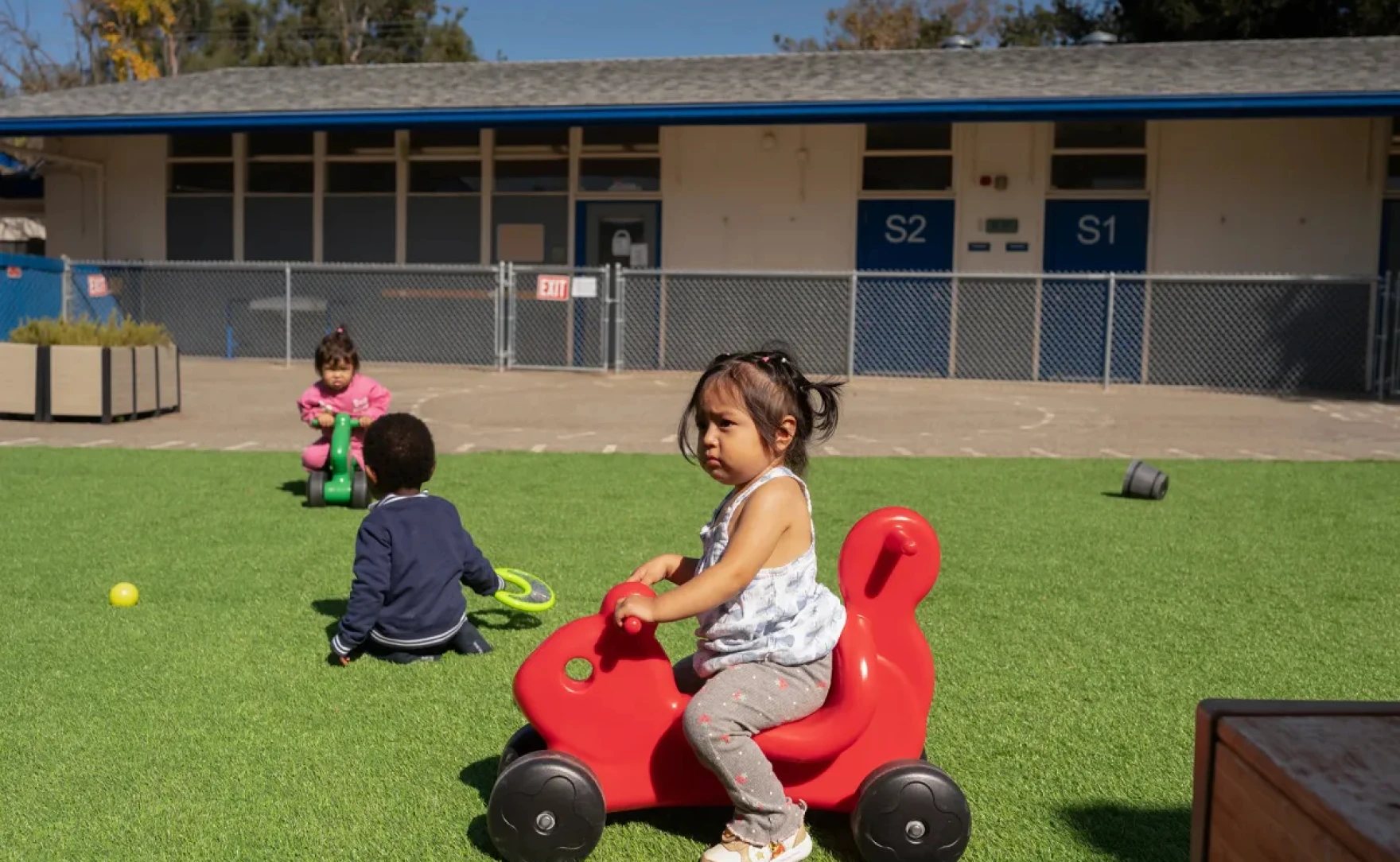

Free childcare for all families is becoming a reality in New Mexico, while New York City is expanding universal childcare for younger children. California has made major investments in childcare and now offers free Transitional Kindergarten to every 4-year-old, but it does not provide universal free childcare from infancy through the preschool years. The main barriers are cost, childcare-worker capacity, availability of care and the challenge of expanding a fragmented system; a Stanford analysis estimates a universal California program for infants and toddlers could cost as much as $21 billion annually.
Introduction
The debate over free childcare for all families is gaining attention across the United States as some states and cities move toward universal programs. New Mexico became the first state to establish no-cost universal childcare, while New York City is beginning a major expansion of free childcare for 2-year-olds. California, meanwhile, has expanded childcare subsidies and fully implemented free Transitional Kindergarten for every 4-year-old, but it has not adopted a statewide system that makes childcare free regardless of family income.
The issue is particularly significant in California because childcare remains expensive and difficult to find in many communities. A recent CalMatters report found that infant and toddler care can cost more than $30,000 a year in some parts of the state, while many childcare centers have lengthy waiting lists.
So why hasn’t California followed New Mexico’s approach?
The answer is not simply that California has done nothing. The state has invested billions of dollars in early learning and childcare, expanded subsidies and introduced universal Transitional Kindergarten. But moving from a targeted subsidy system to genuinely universal childcare would require a much larger workforce, more facilities, additional public funding and significant changes to how California’s childcare system operates.
What Happened?
The immediate discussion comes as other parts of the country move toward broader access to publicly funded childcare.
New Mexico is the clearest example. Its state government expanded the Child Care Assistance program so that families no longer face an income limit for the benefit. The state’s Early Childhood Education and Care Department says Universal Child Care became available on Nov. 1, 2025, and provides no-cost childcare to eligible families regardless of income.
In March 2026, New Mexico Gov. Michelle Lujan Grisham signed legislation formally establishing universal childcare in state law. Her office described it as the first state law guaranteeing no-cost childcare on a universal basis.
New York City is taking a different but also significant approach. Beginning in fall 2026, the city is launching free 2-K childcare seats for 2-year-olds, with the program intended to expand toward universal coverage. The initial rollout includes 2,000 seats, with full universality planned over four years.
The city has also announced that it will eliminate out-of-pocket childcare costs for families already receiving childcare assistance through city vouchers and contracts. That change affects roughly 22,000 families.
California has not announced an equivalent statewide program covering childcare for children of all ages regardless of household income.
Instead, California’s current system combines income-based childcare assistance, state preschool programs, Transitional Kindergarten and other publicly funded early-learning services.
Key Details
Several facts help explain the difference between California and states pursuing universal childcare.
- New Mexico: No-cost universal childcare is available without an income limit for families that meet the program’s basic participation requirements.
- New York City: The city is launching free 2-K for 2-year-olds and plans to expand it toward universal coverage.
- California: Free Transitional Kindergarten is now available to every 4-year-old, regardless of family income.
- California childcare subsidies: Many other childcare programs remain based on income, family circumstances or participation in programs such as CalWORKs.
- Cost: Stanford researchers estimate that a California early-childhood program with universal income eligibility for infants and toddlers could cost approximately $12 billion to $21 billion annually, depending on the design.
- Workforce: Expanding access would require California to have enough childcare workers and providers to serve substantially more children.
Why California Doesn’t Have Universal Childcare Yet
1. California already has a large childcare system
California’s childcare policy is not starting from zero.
The state has expanded subsidized childcare, increased preschool access and created universal Transitional Kindergarten.
The California Department of Social Services currently lists multiple childcare programs, including CalWORKs childcare and Alternative Payment Programs that provide assistance to eligible families. Eligibility can depend on income, family circumstances and other requirements.
California also fully implemented Universal Transitional Kindergarten in 2026. Every 4-year-old in the state is now eligible for TK, providing free public pre-kindergarten.
But TK is not the same thing as universal childcare.
Childcare generally covers younger children, including infants and toddlers, and often needs to accommodate working parents’ schedules beyond a traditional school day.
That distinction is central to the debate.
2. California would need many more childcare workers
Universal access would only work if there are enough people and facilities available to provide the care.
California’s existing childcare market already faces supply and workforce challenges. Expanding the program to every family would increase demand for care, which means the state would need to recruit, train and retain more childcare workers.
CalMatters reported that Assembly Majority Leader Cecilia Aguiar-Curry identified workforce capacity and adequate compensation for childcare workers among the challenges California would face in creating a universal system.
This means that simply allocating money to families would not automatically create more childcare spaces.
3. The price tag would be substantial
The financial scale is another major issue.
Stanford Institute for Economic Policy Research researchers examined California’s early-childhood care market and estimated that a program targeting low- and middle-income families could cost between $4 billion and $8 billion annually.
For a program with universal income eligibility, the estimated annual cost rises to between $12 billion and $21 billion for infants and toddlers, depending on the policy design.
Those figures do not mean California would necessarily need to spend exactly $21 billion if it adopted universal childcare. The actual cost would depend on eligibility, provider reimbursement rates, hours of care, the number of children participating and other design decisions.
4. California’s existing system is fragmented
California’s childcare network includes licensed childcare centers, family childcare homes, subsidized programs and other providers.
Connecting these different parts into a single universal system would be a significant administrative undertaking.
CalMatters reported that lawmakers and education experts have pointed to the need to connect existing services with a broader statewide infrastructure and expand the workforce before universal childcare could become practical.
California Has Already Expanded Free Early Learning
The picture is more complicated than simply saying California does not provide free childcare.
In August 2026, California announced the full implementation of Universal Transitional Kindergarten.
Every 4-year-old in the state is eligible for TK, regardless of family income. The governor’s office said the program saves families nearly $14,000 per child on average. Governor of California
California has also expanded before-school, after-school and summer programming for children, helping some families cover childcare needs outside the traditional school day. The state budget continues funding for expanded childcare and related programs.
For lower-income families, California also provides childcare assistance through several programs.
The Department of Social Services says voucher-based programs can help eligible families pay for care at licensed centers, family childcare homes and certain license-exempt providers.
That means California’s current approach is closer to targeted assistance plus universal preschool for 4-year-olds, rather than universal childcare from birth.
What Officials and Organizations Said
The debate includes different perspectives about what California should prioritize.
Patricia Lozano, executive director of Early Edge California, told CalMatters that the demand for childcare is high and argued that universal childcare could have significant effects on families and the economy.
Assembly Majority Leader Cecilia Aguiar-Curry has also described childcare as a family, workforce and economic issue. At the same time, she pointed to the practical challenges involved in expanding the system and said California should make enrollment easier and improve quality.
Education professor Bruce Fuller of UC Berkeley offered a different emphasis. As reported by CalMatters, he argued that expanding access alone does not guarantee better outcomes for children because the quality of care matters. He has favored a more gradual expansion of publicly funded preschool for younger children while California addresses quality and capacity issues in the existing system.
These positions illustrate an important distinction in the debate: the question is not only who pays for childcare, but also how much care is available, who provides it and what standards apply.
Why This Matters
The childcare debate has consequences beyond individual household budgets.
For parents with infants and toddlers, childcare can be one of the largest regular expenses before children enter public school. Stanford researchers found that childcare costs can consume a significant share of household income in some California counties, particularly for families using full-time center-based care.
The availability of childcare can also affect whether parents work full time, reduce their hours or rely on relatives and informal arrangements.
The Stanford analysis found that inadequate supply and high costs can contribute to parents reducing their labor-market participation or forgoing formal childcare. Researchers also estimated that broader investment could generate economic returns through increased employment and earnings.
However, expanding access presents another challenge: supply must grow alongside demand.
If the state substantially increases subsidies without increasing the number of available providers and workers, families could still face waiting lists.
That is one reason the universal-childcare discussion in California involves both funding and infrastructure.
Free Preschool Is Not the Same as Free Childcare
This distinction is particularly important for parents.
A universal preschool program generally covers an educational program for a particular age group and schedule.
Childcare can begin much earlier and may need to cover a parent’s entire working day.
For example, California’s Universal TK applies to 4-year-olds. A family with a 1-year-old child does not receive universal free childcare simply because TK is available later.
This is why California can simultaneously have universal free TK and still have families paying significant amounts for infant and toddler care.
New Mexico’s model is broader because its Universal Child Care program removes income limits and provides assistance for families using participating childcare providers.
New York City’s 2-K initiative is also specifically designed to reach younger children than California’s universal TK system, although its current rollout is much smaller and is being phased in.
What Happens Next?
As of September 2026, there is no California bill identified in the current CalMatters reporting that would establish universal childcare statewide for every family. The state’s current direction is instead focused on expanding existing childcare capacity, maintaining subsidies, increasing preschool access and operating Universal Transitional Kindergarten.
That does not mean the issue cannot change.
California lawmakers could consider broader eligibility, additional subsidies or a universal model in the future. But doing so would require decisions about funding, provider reimbursement, workforce development, childcare quality, eligibility and the relationship between childcare and the public school system.
For now, California is pursuing a different path from New Mexico: substantial public investment, but not universal free childcare for children of all ages and families regardless of income.
The Bigger Question for California Families
The comparison with other states raises a broader policy question: should childcare be treated primarily as targeted financial assistance for families who meet certain criteria, or as a universal public service similar to public education?
California has already moved closer to the second model in some areas. Universal TK makes free public pre-kindergarten available to every 4-year-old, and universal school meals cover public school students.
But infant and toddler care remains largely outside that universal public-school structure.
The challenge is therefore not simply whether California wants to spend more on childcare. It is whether the state can build enough capacity and establish a funding system capable of covering a much larger share of the population.
For families currently struggling with childcare costs, that distinction matters because a policy can be universal on paper while still leaving parents without a nearby provider or a schedule that fits their work.
Frequently Asked Questions
1. Does California offer free childcare for all families?
No. California does not currently provide universal free childcare for all families regardless of income. However, every 4-year-old is eligible for free Transitional Kindergarten, and eligible families can receive subsidized childcare through several state programs.
2. Which state has universal free childcare?
New Mexico became the first U.S. state to establish no-cost universal childcare. Its Universal Child Care program began removing income limits on childcare assistance in November 2025.
3. Is New Mexico childcare really free for all families?
New Mexico’s program has no income limit and no copays for participating families, but families generally must meet program requirements such as working or attending school, with certain exceptions.
4. Is New York City making childcare free?
New York City is expanding free childcare for younger children. Its 2-K program launched with 2,000 free seats in fall 2026 and is planned to expand toward universal coverage within four years. The city is also covering childcare fees for families already receiving childcare assistance.
5. What is Universal Transitional Kindergarten in California?
Universal Transitional Kindergarten, or TK, provides free public pre-kindergarten to every California 4-year-old. California fully implemented the statewide program in 2026.
6. Why is universal childcare expensive for California?
California would need to finance care for many more children while also expanding the childcare workforce and provider capacity. Stanford researchers estimated that a universal-income-eligibility program for infants and toddlers could cost between $12 billion and $21 billion annually, depending on the design.
7. Can California families already get help paying for childcare?
Yes. California operates several subsidized childcare programs. Eligibility varies by program and can depend on income, family circumstances, participation in programs such as CalWORKs and available funding.
8. Will California introduce universal free childcare?
There is no confirmed statewide universal-childcare program scheduled at this time. Current California policy includes Universal TK, expanded childcare programs and subsidies. Any broader universal childcare proposal would require legislative and budget decisions that have not yet been made.