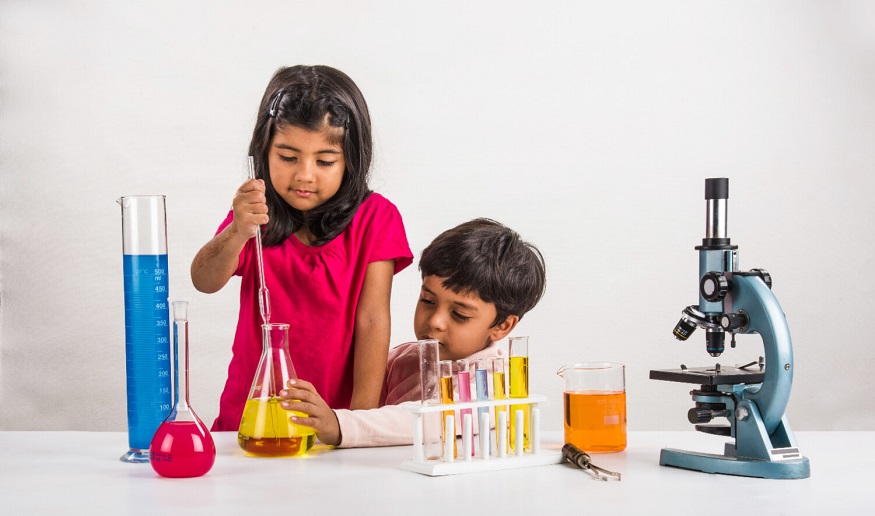

Science is full of surprising facts that can turn everyday questions into learning opportunities. From Venus having a day longer than its year to hummingbirds being able to fly backward, these science facts for kids show how unusual our planet, animals, oceans, plants and human bodies can be. The facts below are based on information from authoritative scientific organizations including NASA, NOAA, Smithsonian Institution and U.S. government science agencies.
Introduction
Science does not always look like a textbook experiment. It can be found in the night sky, in a glass of water, in a garden, in the ocean and even inside our own bodies.
For children, a surprising fact can be the beginning of a much bigger question: Why does that happen? How does it work? What would happen if…?
That curiosity is an important part of science learning.
This collection of 20 science facts for kids brings together verified facts from astronomy, Earth science, biology, ocean science, plant science and human anatomy. The goal is not simply to memorize numbers. Each fact offers a small window into a bigger scientific idea.
Some of these facts are about things children see every day. Others involve places humans cannot easily visit, such as the deep ocean or distant planets.
Here are 20 fascinating examples.
1. 🌍 Earth Is Mostly Covered by Water
Look at Earth from space and one feature immediately stands out: its blue color.
About 71% of Earth’s surface is covered by water. NASA describes Earth as an ocean planet, with oceans covering most of its surface.
But there is an important detail: most of Earth’s water is salty ocean water. Freshwater makes up only a small portion of the planet’s total water, and much of that freshwater is locked away in glaciers, ice caps or underground.
Why it matters: Water is essential for life and plays a major role in weather, climate and ecosystems.
2. ☀️ Sunlight Takes About 8 Minutes to Reach Earth
When children look at the Sun, they are not seeing it exactly as it is at that moment.
Light travels incredibly fast, but the distance between Earth and the Sun is enormous. NASA calculates that sunlight takes about 8.35 minutes to travel from the Sun to Earth.
That means sunlight seen on Earth began its journey more than eight minutes earlier.
This is one reason astronomers often say that looking into space is also looking into the past.
3. 🪐 A Day on Venus Is Longer Than a Year on Venus
Venus has one of the strangest calendars in the solar system.
A Venusian day lasts about 243 Earth days, while one trip around the Sun takes about 225 Earth days. So Venus takes longer to rotate once than it takes to complete an orbit around the Sun.
Venus also rotates in the opposite direction from Earth and most of the other planets.
That makes the planet a great example of why “day” and “year” mean different things in astronomy.
4. 🌀 Jupiter Has a Very Short Day
If a child thinks a 24-hour day is short, Jupiter has an even faster schedule.
Jupiter rotates once in roughly 10 hours, making it the planet with the shortest day in our solar system.
Jupiter is enormous compared with Earth, yet it spins remarkably quickly.
The planet is also famous for its Great Red Spot, a huge storm system that has been observed for centuries.
5. 🌙 About 30 Earths Could Fit Between Earth and the Moon
The Moon may look close when we see it in the night sky, but the actual distance is enormous.
NASA gives the Moon’s average distance from Earth as about 384,400 kilometers. NASA notes that approximately 30 Earth-sized planets could fit between Earth and the Moon.
That comparison is useful for children because kilometers and miles can be difficult to visualize.
Imagine placing 30 Earths in a line. That gives a much better sense of how much space separates our planet from its natural satellite.
6. 🌊 The Deep Ocean Can Be Completely Dark
Sunlight does not travel very far into the ocean.
NOAA explains that hardly any light penetrates below about 200 meters, and no sunlight reaches depths beyond about 1,000 meters.
Yet the deep ocean is not lifeless.
Animals and microorganisms have evolved ways to survive in darkness, extreme pressure and cold conditions.
This is one reason scientists continue to explore the deep sea: there is still much to learn about one of Earth’s largest environments.
7. ✨ Some Ocean Animals Can Make Their Own Light
Imagine swimming through a completely dark ocean and suddenly seeing flashes of blue light.
It sounds like science fiction, but it is real.
The phenomenon is called bioluminescence. NOAA defines it as the production and emission of light by a living organism.
Bioluminescent organisms are found throughout marine environments. Some use their light to help find prey, avoid predators or communicate.
NOAA also notes that bioluminescence is especially common in the ocean’s water column.
Kid-friendly idea: Some living things essentially have their own chemical “light system.”
8. 🦑 The Deepest Part of the Ocean Is Nearly 11 Kilometers Down
The ocean floor is not flat.
NOAA reports that the deepest known part of the ocean is Challenger Deep in the Mariana Trench, at approximately 10,935 meters (35,876 feet).
For perspective, Mount Everest is about 8.8 kilometers above sea level. Challenger Deep extends even farther downward.
Scientists are still improving maps of the seafloor. NOAA reported that only about 26% of Earth’s seafloor had been mapped in high resolution as of June 2024.
So even in the modern age, there are huge parts of our own planet that remain difficult to explore.
9. 🐙 An Octopus Has Three Hearts
The octopus is one of the most unusual animals on Earth.
Smithsonian describes octopuses as highly intelligent animals capable of problem-solving and changing color. They also have three hearts and blue blood.
The blue color of their blood is associated with a copper-containing oxygen-carrying protein called hemocyanin.
Octopuses also have eight arms, giving them remarkable flexibility and control over their movements.
For children, the octopus is a great reminder that animals do not all have bodies designed like ours.
10. 🦋 Butterflies Can Taste With Their Feet
A butterfly landing on a flower is doing more than simply resting.
Smithsonian’s National Zoo explains that butterflies can taste with their feet. Specialized sensory structures help them detect chemical information when they land on surfaces.
This ability can help butterflies determine whether a plant is suitable for feeding or, in some cases, laying eggs.
So when you see a butterfly standing on a plant, it may be gathering information through its feet.
11. 🐦 Hummingbirds Can Fly Backward
Bird flight is impressive, but hummingbirds have an unusual ability.
Smithsonian states that hummingbirds can fly backward as well as forward, and they can hover in one place.
Their unusual wing movement allows them to remain almost stationary while feeding from flowers.
Some hummingbirds can beat their wings dozens of times per second, allowing them to perform highly controlled movements.
This is one reason hummingbirds are often compared with tiny flying machines.
12. 🌱 Plants Use Sunlight to Make Food
Plants may look still, but they are constantly carrying out chemical processes.
Through photosynthesis, plants use light energy to help convert carbon dioxide and water into carbohydrates, while oxygen is released. USDA explains that photosynthesis allows plants to use the Sun’s energy to make food and release oxygen.
This process is fundamental to life on Earth.
It is also a simple way to introduce children to the idea that energy can change form.
The sunlight that reaches a leaf helps power a process that supports plant growth and contributes to the food and oxygen systems on which other organisms depend.
13. 🌿 Scientists Know More Than 380,000 Plant Species
The plant kingdom is far bigger than the trees, flowers and vegetables children see around their homes.
The U.S. Department of Agriculture’s Agricultural Research Service says scientists know of more than 380,000 plants, with many more potentially remaining to be discovered.
Plants range from microscopic organisms to enormous trees.
They also provide food, oxygen, medicines, fibers and materials used by people.
A simple walk through a garden can therefore become a lesson in biodiversity.
14. 🦴 Babies Start With More Bones Than Adults
A baby’s skeleton is not simply a miniature version of an adult skeleton.
Medical references from the National Institutes of Health’s NCBI explain that infants typically have around 270 bones, while adults generally have 206 bones. Some bones fuse together as the body develops.
Bones are also living tissue.
The National Institute of Arthritis and Musculoskeletal and Skin Diseases explains that bone is constantly changing, with old bone removed and new bone formed. During childhood and adolescence, more bone is generally being deposited as the skeleton grows.
This is why nutrition, physical activity and healthy habits during childhood are important for developing strong bones.
15. 🌎 Earth’s Atmosphere Is Mostly Nitrogen
The air around us may feel invisible, but it is made of different gases.
NASA says Earth’s atmosphere is approximately 78% nitrogen, 21% oxygen and 1% other gases, including argon and carbon dioxide.
Children often hear that humans “breathe oxygen,” which is true, but oxygen is only one part of the atmosphere.
The atmosphere also plays several important roles. It helps regulate Earth’s environment and protects the surface from much of the harmful radiation arriving from the Sun.
16. 🌊 The Ocean Looks Blue Because of How Water Interacts With Light
Why isn’t the ocean simply the same color as the sky?
NOAA explains that water absorbs colors toward the red part of the visible spectrum more strongly, leaving more blue light available for us to see.
Ocean color can change, however.
Sediment, microscopic organisms and other particles can make water appear green, brown or even other colors depending on conditions.
So the familiar blue ocean is actually the result of light interacting with water and materials in the water.
17. 🌍 Earth’s Year Is Not Exactly 365 Days
Most children learn that a year has 365 days.
That is a useful approximation, but Earth’s trip around the Sun takes about 365.25 days.
That extra fraction of a day is why our calendar needs a leap year system.
Approximately every four years, an additional day is added to February.
This is a simple example of how astronomy influences something children see every year on a calendar.
18. 🌎 Earth Is Not Perfectly Still
Earth may seem completely stationary when we stand on it, but it is constantly moving.
Earth rotates on its axis, and it also travels around the Sun.
NASA says Earth completes one rotation in about 23.9 hours and one orbit around the Sun in about 365.25 days. Earth’s axis is tilted about 23.4 degrees, and that tilt is responsible for the seasonal cycle.
So when children experience summer, winter, spring or fall, they are experiencing the effects of Earth’s movement and orientation in space.
19. 🐠 Many Deep-Sea Animals Are Bioluminescent
The idea of glowing animals becomes even more surprising when we look at how common it is in parts of the ocean.
NOAA Ocean Exploration reports that bioluminescence is particularly widespread among animals living in the ocean’s midwater environment. Some estimates suggest that a very large percentage of animals in certain deep-water zones can produce light.
Scientists believe the light can have several functions, including finding food, avoiding predators and communication.
However, researchers do not yet know the exact purpose of bioluminescence in every species.
That uncertainty is itself an important lesson in science: scientists do not always have all the answers.
20. 🔬 There Is Still a Lot Scientists Do Not Know About Earth
Perhaps the most important science fact for children is that science is not a finished book.
NASA explains that scientists continue to study Earth using satellites and other tools to understand its atmosphere, oceans, land, weather, climate and changing systems.
NOAA similarly points out that large portions of the ocean remain difficult to map and explore.
That means children growing up today could eventually contribute to discoveries that have not happened yet.
A science lesson should therefore do more than provide answers. It should encourage children to ask better questions.
Why These Science Facts Matter for Kids
Memorizing facts can be fun, but the real educational value comes from understanding the ideas behind them.
For example:
- Venus introduces planetary rotation and orbit.
- Jupiter introduces time and motion in space.
- The Moon helps children understand distance and scale.
- The deep ocean introduces pressure, darkness and adaptation.
- Bioluminescence introduces chemical reactions and animal behavior.
- Octopuses show how different animal body systems can be.
- Butterflies introduce sensory biology.
- Hummingbirds demonstrate specialized movement.
- Plants introduce photosynthesis and energy.
- Bones introduce human anatomy and growth.
These connections can turn a list of facts into a starting point for deeper learning.
How Parents and Teachers Can Use These Facts
Adults do not need complicated equipment to turn these facts into activities.
Ask a “What If?” Question
After reading about Venus, ask:
“What would your birthday be like if a year lasted only 225 Earth days?”
This encourages children to use scientific information creatively.
Try a Scale Activity
Use 30 small balls or paper circles to represent the approximate comparison NASA gives for Earth-Moon distance.
Children can physically see how large a distance can be.
Make a Simple Photosynthesis Discussion
Show a plant and ask:
- Where does it get light?
- Where does water come from?
- What gas does it take from the air?
- What does photosynthesis produce?
Explore Animal Adaptations
Ask children why an octopus might benefit from changing color or why a hummingbird needs specialized wings.
The objective is to connect a physical feature with a survival function.
Create a Science Fact Journal
Children can write or draw one science fact each day.
A page might include:
Fact: Hummingbirds can fly backward.
My question: How do their wings move?
My prediction: Their wings must move differently from most birds.
This changes passive reading into active scientific thinking.
The Bigger Lesson: Science Starts With Curiosity
The most interesting part of science is often not the fact itself.
It is the question that comes next.
If a child learns that Venus has a day longer than its year, the next question might be:
“Why does Venus rotate so slowly?”
If they learn that an octopus has three hearts, they might ask:
“Why does it need three?”
If they learn that some ocean animals produce light, they might wonder:
“How can an animal make light without electricity?”
Those questions are where deeper learning begins.
For parents and teachers, science does not always require an expensive experiment or a complicated lesson plan. Everyday observations can provide opportunities to explore astronomy, biology, physics, Earth science and chemistry.
A walk outside, a night under the stars, a visit to an aquarium, a garden plant or even a glass of water can become the starting point for a science conversation.
The 20 facts in this article are therefore best viewed as conversation starters for curious kids, not simply a list to memorize.
Science is all around children. The challenge is often simply helping them notice it.
What Parents Should Remember
The strongest science learning happens when children are encouraged to ask questions rather than being expected to remember every answer.
Parents and teachers can use surprising facts to encourage children to:
- Observe something carefully.
- Ask a question.
- Make a prediction.
- Look for evidence.
- Test an idea when possible.
- Change their thinking when new evidence appears.
That process is much more valuable than memorizing a long list of disconnected facts.
And there is one final fact worth remembering: there are still many things about our planet, our oceans, living organisms and the universe that scientists are working to understand.
For a child, that means the next fascinating discovery could still be waiting to be made.
Frequently Asked Questions
1. What are some fun science facts for kids?
Some fun science facts include the fact that Venus has a day longer than its year, hummingbirds can fly backward, octopuses have three hearts, butterflies can taste with their feet, and some ocean organisms can produce their own light.
2. What is the most surprising science fact about space?
One especially surprising fact is that Venus takes about 243 Earth days to rotate once but only about 225 Earth days to orbit the Sun. In other words, its day is longer than its year.
3. How far is the Moon from Earth?
The Moon is an average of about 384,400 kilometers from Earth. NASA notes that roughly 30 Earth-sized planets could fit between Earth and the Moon.
4. How many hearts does an octopus have?
An octopus has three hearts. Smithsonian also notes that octopuses have blue blood and are highly intelligent animals capable of complex problem-solving.
5. Can hummingbirds really fly backward?
Yes. Hummingbirds can fly backward as well as hover and fly forward. Their unusual wing movement gives them exceptional control in the air.
6. Why is the ocean blue?
Water absorbs more of the red portion of visible light, leaving more blue light available to be scattered back toward our eyes. Ocean conditions can also make the water appear green, brown or other colors.
7. How many bones does a human have?
A typical adult human skeleton has 206 bones. Infants generally have around 270 bones, with some bones joining together as the body develops.
8. Why is learning science important for children?
Science helps children understand how the natural world works while developing observation, questioning, reasoning and evidence-based thinking. Simple science facts can be used as starting points for experiments, conversations and further investigation.