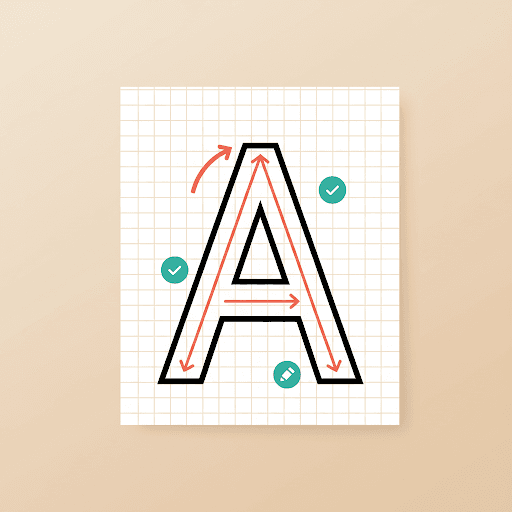

A to z alphabet worksheets PDF resources help young children practise all 26 letters of the English alphabet, from A to Z. Depending on the worksheet, activities may include tracing uppercase and lowercase letters, matching letters with pictures, recognizing letter sounds, and practising early handwriting. Parents and teachers can use printable worksheets alongside books, songs, and hands-on activities to make alphabet learning more engaging.
A to Z Alphabet Worksheets PDF for Preschool and Kindergarten
Introduction
Learning the English alphabet is one of the first steps children take toward reading and writing. For parents, preschool teachers, and kindergarten educators, an a to z alphabet worksheets PDF can be a practical way to introduce letters, encourage handwriting practice, and build familiarity with the alphabet through simple daily activities.
The English alphabet contains 26 letters, from A to Z. Each letter has an uppercase form and a lowercase form, and letters represent sounds used to read and spell words. Children benefit from learning to recognize these forms, say letter names, explore their sounds, and practise writing them.
Printable alphabet worksheets can bring these skills together on a single page. A worksheet might ask a child to trace the letter A, identify an apple in a picture, match uppercase A with lowercase a, or practise writing the letter independently.
However, worksheets are only one part of early literacy learning. Reading books aloud, singing alphabet songs, talking about everyday objects, and playing with letter cards can make practice more meaningful. Reading Rockets, an educational resource focused on literacy, explains that alphabet knowledge includes understanding letter names, shapes, and sounds.
For families looking for printable ABC practice, the most useful worksheets are those that match a child’s current abilities, provide clear instructions, and allow plenty of room for writing.
What Are A to Z Alphabet Worksheets?
A to z alphabet worksheets are educational activity sheets designed to help children learn the 26 letters of the English alphabet in sequence or individually.
They may be available as individual printable pages or as a combined PDF containing multiple activities. The exact content depends on the publisher or worksheet creator, so parents should check what a particular file includes before printing it.
Common worksheet activities include:
- Letter tracing: Following dotted or outlined letters with a pencil or crayon.
- Uppercase and lowercase matching: Connecting A with a, B with b, and so on.
- Letter recognition: Finding a target letter among several different letters.
- Picture association: Matching a letter with a familiar word, such as A for apple.
- Alphabet sequencing: Filling in missing letters or arranging letters in order.
- Independent writing: Copying a letter without dotted guides.
- Beginning-sound activities: Identifying words that begin with a particular sound.
These activities give children different ways to interact with the alphabet. Some focus on visual recognition, while others develop hand control, sound awareness, or early writing skills.
What Do Alphabet Worksheets Typically Include?
A complete A-to-Z worksheet collection may include several types of practice. Understanding the differences can help parents and teachers choose suitable materials.
1. Uppercase Alphabet Worksheets

Capital letters A to Z
Uppercase worksheets introduce letters such as A, B, C, and D. Children may trace large letters, colour them, circle matching examples, or copy them onto writing lines.
These sheets are useful when a child is beginning to recognize the shapes of printed letters.
2. Lowercase Alphabet Worksheets

Small letters a to z
Lowercase letters appear frequently in ordinary written words. Worksheets may ask children to trace a, b, c, and the remaining letters, then identify them in simple words.
Practising lowercase forms alongside uppercase forms helps children understand that two different shapes can represent the same letter.
3. Letter Tracing Worksheets

Guided handwriting practice
Dotted letters provide a visual path for children to follow. Worksheets may include directional arrows or starting points to show how to form a letter.
Begin with a few repetitions and gradually offer blank writing lines as the child gains confidence.
4. Alphabet Worksheets With Pictures

Letters and familiar objects
Picture-based worksheets connect letters with words children already know. Examples include A for apple, B for ball, C for cat, and D for dog.
Adults can say the word aloud and help children listen for its first sound rather than relying on the picture alone.
How A to Z Alphabet Worksheets Help Children Learn
Alphabet worksheets can support several early learning skills when used with appropriate guidance.
Letter Recognition
Children learn to distinguish letters by their shapes. They might identify A on a page, find the same letter in a book, or match a capital letter to its lowercase form.
Letter recognition is an important early reading skill, although children develop it at different rates. Reading Rockets recommends direct, systematic opportunities to learn letter names and identify letter forms.
Early Handwriting Skills
Tracing and copying letters give children opportunities to practise pencil control and letter formation. Repeated, short activities may help children become more familiar with the movements used to write letters.
Writing practice should remain comfortable and manageable. Younger children may benefit from drawing lines, making shapes, playing with modelling dough, and using large crayons before attempting extended pencil exercises.
The UK Department for Education’s early-years guidance emphasizes developmentally appropriate mark-making, hand strength, and supported letter formation.
Letter-Sound Awareness
Letters represent sounds used in spoken words. An adult can introduce a letter by naming it, modelling a common sound, and giving an example.
For instance, a child learning the letter M might hear the word moon and practise noticing its initial sound. The adult can then point out the printed letter M.
Some letters represent different sounds in different words. C, for example, has a different common sound in cat and city. Therefore, picture associations should be used as starting points for learning, not as rigid rules that apply to every word.
Visual Memory and Attention
Matching letters, finding a missing letter, and circling a target character encourage children to look carefully at printed symbols.
These activities can help children notice differences between letters that look similar, such as b and d. Adults should demonstrate the differences patiently rather than expecting children to master every pair immediately.
Confidence Through Practice
A worksheet with a clear beginning and end can help a child see progress. Finishing a small task may also create an opportunity for positive feedback.
Praise the child’s effort and improvement instead of expecting every letter to be perfect. If the activity becomes frustrating, take a break or switch to a song, story, or letter-matching game.
A to Z Alphabet Worksheets: Letter-by-Letter Learning Guide
Parents and teachers can use the following examples when choosing or creating alphabet practice pages.
| Letter | Example word | Suggested activity |
|---|---|---|
| A a | Apple | Trace A and a, then colour an apple |
| B b | Ball | Match B with b and circle the ball |
| C c | Cat | Trace both forms and identify the picture |
| D d | Dog | Practise writing D and d |
| E e | Egg | Find E among other letters |
| F f | Fish | Trace F and colour a fish |
| G g | Grapes | Match uppercase and lowercase G |
| H h | Hat | Copy H and h onto writing lines |
| I i | Ice cream | Find and circle the letter I |
| J j | Jug | Trace J and j |
| K k | Kite | Match the letter with its picture |
| L l | Lion | Practise writing L and l |
| M m | Moon | Say the word and notice its first sound |
| N n | Nest | Find N in a group of letters |
| O o | Orange | Trace the round shape of O |
| P p | Pen | Copy P and p |
| Q q | Queen | Match Q with q |
| R r | Rabbit | Trace R and r |
| S s | Sun | Identify S in familiar words |
| T t | Tree | Practise T and t |
| U u | Umbrella | Match U with u |
| V v | Van | Trace and copy V and v |
| W w | Watermelon | Find W among other letters |
| X x | Xylophone | Trace X and x |
| Y y | Yo-yo | Match uppercase Y with lowercase y |
| Z z | Zebra | Complete the final alphabet practice page |
These are suggested learning activities, not a claim that every PDF includes these exact words or exercises. Some words, including xylophone, may be less familiar to younger children, so adults can explain them using pictures or objects.
How to Choose the Best Printable Alphabet Worksheets PDF
Not every alphabet worksheet is appropriate for every child. Before downloading or printing a resource, check the following features.
Clear and Readable Letters
Choose worksheets with large, well-spaced letters and an easy-to-read font. Avoid pages that crowd too many activities into a small space.
For beginners, simple layouts with one or two tasks per page can be easier to use.
Uppercase and Lowercase Practice
A useful collection should ideally include both forms of the alphabet. If a child already recognizes capital letters, lowercase worksheets can provide the next challenge.
Dotted Letters and Writing Lines
Dotted outlines can guide early tracing, while blank lines encourage independent writing. A good progression moves from tracing to copying and, eventually, writing from memory.
Children do not all need the same amount of practice. Adjust the number of repetitions according to their comfort and ability.
Picture-Based Activities
Pictures can make worksheets more interesting and help adults introduce vocabulary. Select familiar examples where possible and pronounce the words clearly.
Print Quality and Page Size
Before printing a complete pack, check whether the PDF is designed for A4 paper, US Letter paper, or another page size. Use the print preview to ensure letters and writing lines are not cut off.
Black-and-white worksheets can be economical for everyday practice, while colourful pages may be useful for classroom displays or selected activities.
Check Usage Rights
Free access does not always mean unrestricted use. Read the publisher’s licence or terms before sharing worksheets online, distributing copies commercially, or including them in a product bundle.
If you plan to sell a printable alphabet workbook, create original content or obtain the appropriate commercial rights rather than repackaging another publisher’s worksheets.
How to Use Alphabet Worksheets at Home
Parents do not need a complicated teaching plan to introduce alphabet worksheets. A simple, consistent routine can provide opportunities to practise recognition, speaking, and writing.
Step 1: Introduce the letter
Show the child one letter and say its name. Find the same letter in a book, on a toy, or on a familiar package.
Step 2: Say the sound
Model a common sound associated with the letter. Use a simple example, such as M in moon, and let the child listen and repeat if ready.
Step 3: Trace and write
Start with a large dotted letter. Encourage the child to follow its shape, then try copying it onto a blank line.
Step 4: Find the letter
Ask the child to find the target letter on the worksheet or in a storybook. Include uppercase and lowercase examples.
Step 5: Review through play
Finish with a short alphabet song, a matching game, or a search for objects that begin with the target sound.
The purpose is to build familiarity with letters, not to complete as many worksheet pages as possible. Keep activities flexible and allow the child to repeat letters that are still difficult.
A Simple Weekly Alphabet Practice Plan
A weekly plan can help families organise practice without turning it into a demanding school lesson.
| Day | Suggested activity |
|---|---|
| Monday | Introduce two familiar letters and practise identifying them |
| Tuesday | Trace the letters and match uppercase with lowercase |
| Wednesday | Connect letters with pictures and spoken words |
| Thursday | Search for the letters in books, signs, or household items |
| Friday | Review previously introduced letters through a game |
| Saturday | Try a short worksheet independently, with help if needed |
| Sunday | Enjoy an alphabet story or song and revisit difficult letters |
This is an example schedule, not a required curriculum. Introduce fewer letters if the child needs more time, and revisit earlier letters rather than moving forward simply because the week has ended.
Are Alphabet Worksheets Suitable for Toddlers, Preschoolers, and Kindergarten Children?
The best activity depends on the child’s developmental stage, interests, and existing skills.
Toddlers
For very young children, begin with picture books, songs, alphabet blocks, and large letters. Some may enjoy colouring or making marks on paper, but extended tracing exercises may not be appropriate.
The goal is to create positive experiences with language, pictures, and print.
Preschool Children
Preschoolers who show interest in letters may enjoy matching games, simple tracing sheets, picture-based alphabet pages, and activities involving the letters in their names.
Offer support and keep writing practice short. Children may demonstrate early writing through marks and drawings before they can form conventional letters.
Nursery and Kindergarten Children
Children ready for more structured practice may benefit from uppercase and lowercase matching, letter formation, beginning sounds, and simple alphabet sequencing activities.
Some may also begin connecting letters with words and reading simple text that matches their phonics knowledge.
The UK Department for Education’s early-years guidance distinguishes between early writing development and the more developed letter formation and word-reading skills expected at later stages. Its guidance can help educators understand how literacy learning progresses.
Important: These are general suggestions, not strict age requirements. Children develop at different rates, and worksheet completion alone does not determine reading readiness.
Where Can You Find A to Z Alphabet Worksheets PDF Resources?
Parents and teachers can explore educational websites that offer literacy activities, printable resources, or guidance for teaching letters.

Reading Rockets
Explore guidance on alphabet knowledge, letter sounds, and early reading activities. The website also links to selected downloadable resources and practical teaching ideas.

UK Department for Education
Read official early-years guidance on writing, mark-making, language, and literacy. These pages explain developmental goals and practical ways adults can support children.
Best for: Teachers and parents who want an official educational reference.

Alphabet Matching activities
Reading Rockets provides ideas for matching uppercase and lowercase letters and identifying missing letters. These activities can complement printed tracing pages.
Best for: Practising recognition and alphabet order.
Explore alphabet-matching activities
These are educational reference resources, not a guarantee that each website offers a single complete A-to-Z PDF in the exact format you want. Check the individual page for current download options, printing permissions, and any applicable terms.
Tips for Printing and Using Alphabet Worksheets
A few practical choices can make printable resources easier to use.
- Print only the pages you need. Start with the letters your child is learning instead of printing a large pack immediately.
- Use comfortable writing tools. Chunky crayons or beginner-friendly pencils may be easier for some children to hold.
- Choose uncluttered pages. Large letters, clear writing lines, and simple pictures make activities easier to follow.
- Keep reusable copies where permitted. If the licence allows it, a page can be placed in a reusable sleeve so children can practise with a suitable erasable marker.
- Check the PDF before printing. Look for missing characters, cut-off edges, blurry text, and incorrect letter labels.
- Combine paper and hands-on learning. Use letter cards, alphabet blocks, songs, books, and everyday objects as well as worksheets.
- Give specific encouragement. Comments such as “You found lowercase b” or “You followed the letter shape carefully” tell children what they did well.
For families with limited printer access, alphabet learning can still happen with homemade letter cards, notebooks, chalkboards, or letters drawn on paper.
Common Mistakes to Avoid When Teaching the Alphabet
Even a well-designed worksheet can become less useful if the activity is too difficult or repetitive.
Expecting Perfect Handwriting Too Soon
A child may recognize a letter before being able to write it accurately. Separate letter recognition from handwriting expectations, and provide guidance without demanding perfect results.
Teaching Only Letter Names
Letter names are important, but early reading also involves learning how letters represent sounds. Introduce common sounds gradually and use examples that children can understand.
Treating Every Letter-Sound Relationship as Simple
Some letters have more than one sound, and some sounds are represented by combinations of letters. Explain these patterns as children encounter them rather than suggesting that each letter always makes exactly one sound.
Using Too Many Worksheets in One Sitting
Long sessions may cause frustration or fatigue. Short activities with breaks and variety are often more manageable for young learners.
Comparing Children With Others
Children may learn letter names, sounds, and writing skills at different rates. Use progress over time to decide what to practise next instead of treating the worksheet as a competition.
Why A to Z Alphabet Worksheets Matter for Early Literacy
Alphabet worksheets can be a useful resource because they make letters visible and give children opportunities to recognize, trace, copy, and discuss them.
Their greatest value comes from how adults use them. A parent who says a letter’s name, models its sound, connects it with a familiar word, and encourages a child to find it in a story provides context that a worksheet alone cannot supply.
Reading Rockets describes alphabet knowledge as involving letter names, shapes, and sounds, while the UK Department for Education emphasizes the relationship between language, early writing, and reading development. Together, these educational resources support a balanced approach that combines printed practice with conversation, books, and hands-on activities.
For parents, the practical takeaway is simple: choose clear, age-appropriate printable pages, practise a manageable number of letters, and make time for play and conversation. A PDF can provide structure, but enjoyable and consistent learning experiences matter more than completing a particular number of pages.
What Happens Next?
There is no single required next step after a child finishes an A-to-Z worksheet pack. Parents can review letters that remain unfamiliar, introduce lowercase forms, practise common letter sounds, or move toward simple word-building activities when the child is ready.
Teachers can observe which letters a child recognizes, names, sounds out, or writes independently and use those observations to plan further instruction.
For more advanced learners, letter practice can gradually connect to blending sounds, recognizing familiar words, and reading simple books that match their current phonics knowledge. Progress should be based on the child’s demonstrated skills rather than the number of completed worksheets.
Frequently Asked Questions
1. What are a to z alphabet worksheets PDF files?
They are printable educational pages that help children practise the 26 letters of the English alphabet. Depending on the resource, a PDF may include tracing, uppercase and lowercase matching, picture identification, letter sounds, and writing exercises.
2. Can I find free printable alphabet worksheets?
Yes. Some educational websites offer free alphabet activities or downloadable worksheets. Check each resource’s current download options and licence terms, because not every activity is available as a free PDF or permits unrestricted reuse.
3. What age is suitable for alphabet tracing worksheets?
Suitability depends on the child’s interests and fine-motor development. Some preschool children enjoy simple tracing activities, while younger toddlers may benefit more from songs, picture books, large letters, and mark-making.
4. Should children learn uppercase or lowercase letters first?
There is no single sequence that works best for every child. Uppercase letters can be a convenient starting point for some activities, but children also need opportunities to recognize lowercase letters, which are common in written words. Practise both forms progressively.
5. How many alphabet letters should a child practise each day?
There is no universal number. Some children may enjoy exploring several familiar letters in one session, while others benefit from focusing on one or two letters. Adjust the activity to the child’s attention, comfort, and current knowledge.
6. Do alphabet worksheets teach letter sounds?
Some worksheets include letter sounds, while others focus only on tracing or recognition. To support early phonics, adults should model the sound, say example words, and help children notice the sound in spoken language.
7. Are alphabet tracing worksheets enough to teach a child to read?
No. Tracing can support letter formation, but reading also involves language comprehension, letter-sound knowledge, blending, vocabulary, and experience with books. Combine worksheets with shared reading, conversation, songs, and suitable phonics activities.
8. How can I make alphabet worksheets more interesting?
Use colourful pencils, familiar pictures, matching games, alphabet songs, and objects around the home. Invite the child to find a letter on a book cover or sign, then return to the worksheet for a short practice activity.
9. Can teachers use printable alphabet worksheets in classrooms?
Yes, when the resource’s licence permits classroom use. Teachers can use worksheets for guided practice, small-group activities, or individual review. Hands-on activities and direct instruction should complement paper-based exercises.
10. How do I choose a good A to Z alphabet worksheets PDF?
Look for clear letter shapes, both uppercase and lowercase practice, appropriate tracing guides, uncluttered layouts, and activities suited to the child’s abilities. Check print quality and page size before printing the full resource.



