
The best toddler toys of 2026 are not necessarily the newest electronic products. Current toy testing and pediatric guidance continue to favor age-appropriate toys that encourage hands-on exploration, pretend play, problem-solving, creativity, movement and interaction with caregivers. Strong categories include building blocks, pretend-play toys, puzzles, books, art materials, balls, musical toys and simple sensory or construction activities.
Introduction
🧸 Finding a good toy for a toddler can be harder than it looks. Store shelves and online marketplaces are filled with products promising learning, development and entertainment, but parents still have to decide which toys are likely to provide meaningful play rather than simply making noise or flashing lights.
In 2026, the conversation around the best toddler toys continues to move toward toys that children can actively use rather than products that do everything for them.
Recent 2026 toy testing from Good Housekeeping involved experts, parents and 370 child testers, with products assessed for factors including safety, ease of use, engagement and play value. Its current preschool coverage similarly emphasizes toys that encourage creativity, skill development and repeated play.
At the same time, the American Academy of Pediatrics (AAP) has long recommended choosing safe, affordable and developmentally appropriate toys that encourage imagination, language-rich interaction, pretend play, problem-solving and physical activity.
That combination provides a useful framework for parents shopping for toddlers in 2026.
Rather than naming one universally “best” toy, this guide looks at 15 toy categories worth considering, why they appeal to toddlers and what parents should check before buying.
What Happened? Why Are Toddler Toys Getting More Attention in 2026?
There is no single official “best toddler toy of 2026.”
Instead, the current toy landscape includes professional testing, parent reviews, child feedback and ongoing guidance about developmentally appropriate play.
Good Housekeeping’s 2026 Toy Awards are one example. The publication says its testing process involved experts and 370 child testers, with children and families providing feedback about products in real-world use.
The broader issue is that parents have an enormous number of choices.
A toddler can be surrounded by educational apps, electronic toys, talking products, building sets, pretend-play toys, books, puzzles and outdoor equipment.
The AAP’s guidance offers an important distinction: a toy’s value depends partly on how it is used.
The organization says toys can support cognitive, language, social-emotional and physical development, particularly when they encourage interaction between children and caregivers.
That makes simple toys particularly relevant.
15 Best Toddler Toys to Consider in 2026
1. 🧱 Building Blocks
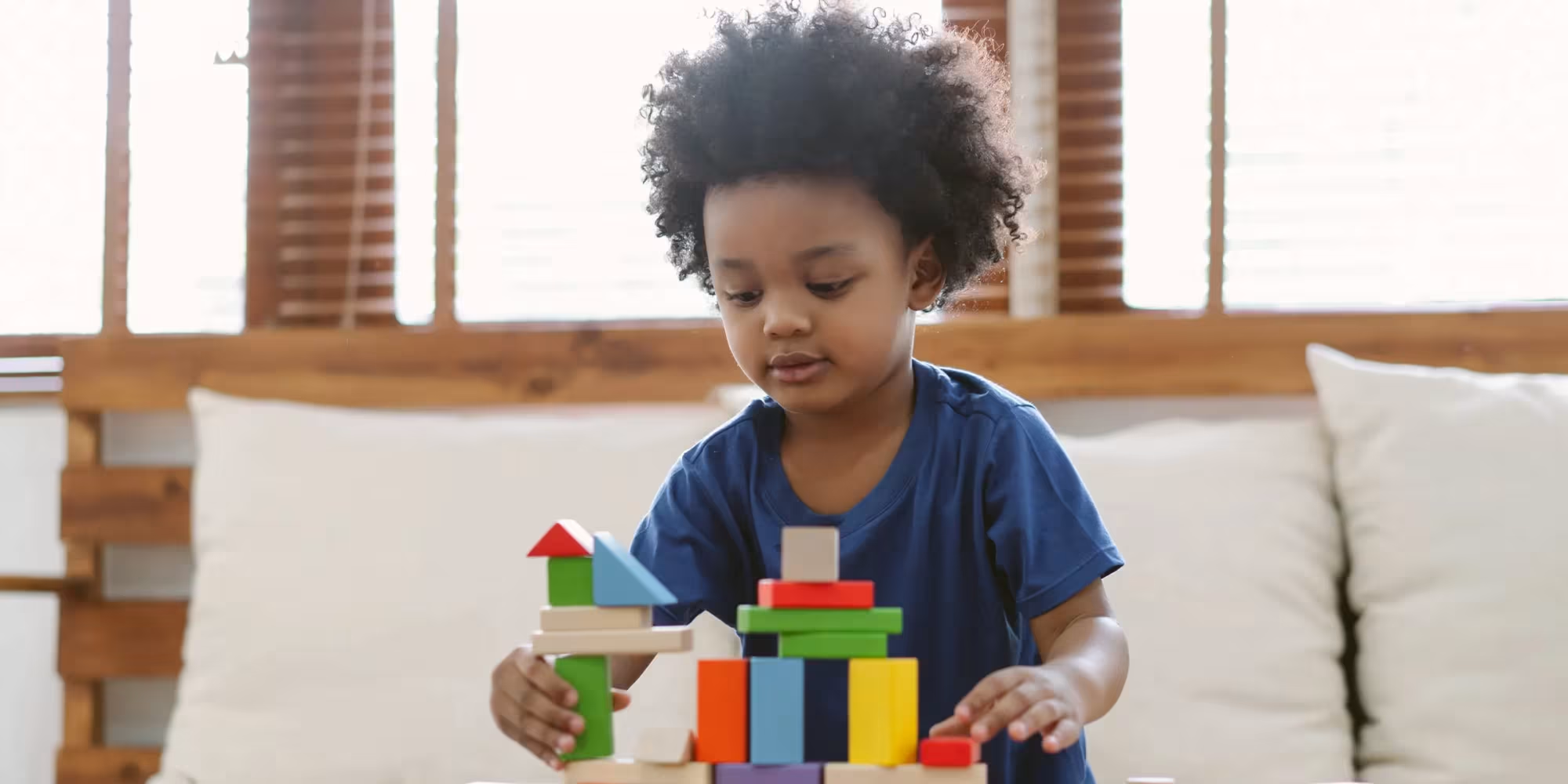
Classic building blocks remain one of the strongest choices for toddlers because they can change as the child’s skills develop.
A younger toddler may simply stack or knock blocks down. With time, the same blocks can become houses, towers, roads or objects in pretend play.
The AAP specifically identifies blocks as traditional toys that can support problem-solving, fine-motor development and early spatial and mathematical skills.
Why parents may like them:
- Open-ended play
- No screen required
- Can be used in many ways
- Easy to combine with pretend play
- Can grow with the child
Best for: Toddlers who enjoy building and experimenting.
2. 🧩 Large-Piece Puzzles
Simple puzzles can introduce toddlers to matching, shapes, visual relationships and problem-solving.
For younger children, choose puzzles with large, easy-to-handle pieces and an age recommendation appropriate for the child.
The goal is not to make the child complete increasingly difficult puzzles immediately. The activity should remain enjoyable.
Best for: Quiet play and early problem-solving.
3. 🍳 Pretend Kitchen Toys
Pretend kitchens and food sets allow toddlers to imitate familiar activities.
A child might pretend to cook, serve food, feed a stuffed animal or prepare a meal for a parent.
This type of play can also encourage language because adults can join in and ask questions such as, “What are you cooking?” or “Who is having dinner?”
The AAP identifies pretend play as an important part of language, symbolic thinking and social-emotional development.
Best for: Toddlers who enjoy copying adults.
4. 🧸 Dolls and Pretend-Care Toys
A doll or stuffed animal can become much more than a cuddly toy.
Toddlers may pretend to feed, bathe, comfort, dress or put their toy to sleep.
Parents can join the game and introduce new words or stories.
The AAP notes that pretend play with dolls, animals and associated objects can encourage words, narratives and symbolic thinking.
Best for: Imaginative and nurturing play.
5. 📚 Picture Books and Board Books
Books remain one of the simplest additions to a toddler’s toy collection.
Board books are particularly practical for younger children because they are designed for repeated handling.
Parents can make reading interactive by asking the child to identify animals, objects, colors or characters.
The AAP recommends books and storytelling as ways to support interaction and language-rich play.
Best for: Language development and parent-child interaction.
6. 🎨 Washable Art Materials
Crayons, large drawing tools, washable paints and age-appropriate art materials can give toddlers a chance to experiment.
The important consideration is selecting materials intended for the child’s age and following the manufacturer’s safety guidance.
Parents should also supervise art activities appropriately, particularly when materials contain small components.
Best for: Toddlers beginning to explore drawing and color.
7. ⚽ Soft Balls
A simple ball can encourage toddlers to move, kick, roll, throw and eventually catch.
Unlike many electronic toys, a ball requires the child to physically participate.
The AAP notes that physical play with toys such as balls can support gross-motor development and peer interaction.
Best for: Active toddlers.
8. 🎵 Simple Musical Instruments
Child-friendly drums, shakers and other simple instruments can introduce rhythm and sound.
Parents can sing along, create simple rhythms and encourage children to copy them.
Musical play can also become a social activity instead of something a child does alone.
Best for: Children who love music and movement.
9. 🛒 Pretend Shopping Sets
A pretend shopping basket and age-appropriate play food can create a miniature version of an everyday activity.
Toddlers can pretend to shop, sort items, name foods and interact with parents.
It is another example of a toy that can grow with the child’s imagination.
Best for: Pretend play and early communication.
10. 🧲 Simple Construction Toys
Age-appropriate construction sets can give toddlers opportunities to connect, stack and arrange pieces.
Parents should be particularly careful about products containing magnets.
The AAP has warned about the serious risks associated with ingestion of high-powered magnets and recommends awareness of toy-related safety hazards.
Best for: Construction play, when specifically designed for the child’s age.
11. 🐻 Animal Figures
Large, age-appropriate animal figures can become part of imaginative play.
A toddler might create a zoo, farm or jungle, make animal sounds or build a story around the figures.
Parents can turn the activity into a language game by naming animals and asking simple questions.
Best for: Imaginative storytelling and vocabulary.
12. 🧸 Sensory Play Materials
Simple sensory activities can give toddlers opportunities to explore textures and movement.
Depending on the product and child’s age, this could include developmentally appropriate dough or other supervised sensory materials.
Safety is especially important here because toddlers naturally explore objects with their mouths.
Best for: Hands-on exploration.
13. 🚗 Push-and-Pull Vehicles
Simple cars, trucks and other push-and-pull toys can encourage movement and imaginative play.
A toddler may push the vehicle across the floor, create a road or combine it with blocks.
Look for sturdy products without easily detachable small parts.
Best for: Active floor play.
14. 🧺 Sorting and Stacking Toys
Stacking cups, shape sorters and similar activities can give toddlers a simple challenge.
Children can experiment with size, position, shape and order.
These toys also offer an easy way for parents to participate without taking control of the activity.
Best for: Early reasoning and fine-motor exploration.
15. 🌳 Outdoor Exploration Toys
Toddlers benefit from opportunities to move and explore outside.
Depending on the child’s age and environment, suitable outdoor toys could include balls, ride-on toys, simple push toys or supervised nature-exploration materials.
Parents should follow manufacturer instructions and use appropriate safety equipment where necessary.
Best for: Active and outdoor-loving toddlers.
Key Details: What Makes a Good Toddler Toy?
The most useful question isn’t always:
“Is this toy educational?”
A better question is:
“What can my child actually do with it?”
A strong toddler toy may allow children to:
- Explore
- Build
- Pretend
- Move
- Communicate
- Solve simple problems
- Experiment
- Create
- Play with a caregiver
- Use their imagination
The AAP recommends toys that encourage language-rich caregiver-child interaction, pretend play, physical activity, problem-solving and creativity. It also notes that a good toy does not have to be expensive or trendy.
Open-Ended Toys vs. Electronic Toys
Electronic toys are not automatically bad choices.
However, parents should consider whether the product encourages the child to actively participate or simply watches and responds to the toy.
The AAP’s clinical report raises concerns about the replacement of traditional play and caregiver interaction by digital-media-based toys and notes that many marketing claims about “educational” toys do not have strong scientific evidence behind them.
That is why open-ended toys continue to have an important place.
A block does not tell a child what to build.
A doll does not determine the story.
A blank piece of paper does not decide what the child should draw.
The child makes those decisions.
That flexibility can be valuable.
Background: Why Simple Toys Continue to Matter
The modern toy industry has changed considerably, but the basic purpose of play has not.
Children still build, pretend, draw, move, imitate adults and create stories.
The AAP’s 2019 clinical report explains that play supports cognitive, language, social-emotional and physical development. It also emphasizes that caregiver interaction is particularly important when toys are being used as tools for play.
The organization also makes an important point for parents under pressure to buy expensive products: toys do not have to be trendy or expensive to be useful.
Sometimes a simple toy provides more freedom because the child has to decide what to do with it
What Current 2026 Toy Testing Shows
Current toy coverage also places considerable emphasis on how children actually respond to products.
Good Housekeeping’s 2026 Toy Awards included testing by experts and feedback from 370 child testers and their families. Its preschool selection focuses on toys that engaged children, were practical to use and offered opportunities for repeated play.
This is useful because a toy can look impressive in an advertisement but fail to hold a child’s attention.
Real-world play provides a different perspective.
For parents, the lesson is not that award-winning toys are automatically right for every toddler. Instead, it is that actual child engagement is an important factor when evaluating a toy.
What Officials and Organizations Say
There is no government or pediatric organization that publishes one definitive list of the “best toddler toys of 2026.”
Instead, established organizations provide principles for choosing them.
American Academy of Pediatrics
The AAP recommends safe, affordable and developmentally appropriate toys that encourage imagination, exploration, problem-solving, pretend play, physical activity and interaction with caregivers.
It also warns parents to pay attention to safety issues involving small parts, button batteries and high-powered magnets.
U.S. Consumer Product Safety Commission
Toy safety guidance emphasizes age recommendations and safety information. Parents should check product labeling and consider whether a toy is appropriate for the individual child.
Age labeling is particularly important for toddlers because small components can create choking hazards.
The AAP’s review of toy age labeling notes that safety labeling for hazards such as small parts is mandatory under applicable U.S. toy-safety requirements.
Current Toy Testing
Good Housekeeping’s 2026 testing provides another, different type of evidence: hands-on assessment involving experts and children. Its methodology emphasizes safety, ease of use and playability.
These sources should not be treated as saying that one particular product is best for every child. They provide different information parents can use when making purchasing decisions.
Why This Matters for Parents
Parents are often told that a toy needs to teach something.
But toddlers also need to play.
A toy can be valuable because it gives a child the opportunity to invent a story, build a tower, roll a ball, make a drawing or sit with a parent and read.
The AAP specifically describes toys as tools that can facilitate warm, supportive interactions rather than replacements for those relationships.
That means the most important feature of a toddler toy may not be the number of buttons it has or how many educational claims appear on the box.
It may simply be whether the child wants to use it.
Toddler Toy Safety: What Parents Should Check
Before buying any toy, parents should read the age recommendation and safety warnings.
Check the recommended age
A product designed for an older preschooler may not be appropriate for a toddler.
Watch for small parts
Toddlers frequently put objects in their mouths. Small detachable components can therefore present a choking risk.
Be careful with button batteries
Button or coin batteries can cause serious injuries if swallowed. The AAP specifically identifies button batteries as a significant safety concern.
Avoid accessible high-powered magnets
Swallowed high-powered magnets can cause serious medical complications. Parents should take particular care with magnetic toys and keep unsafe magnetic components away from young children.
Inspect toys regularly
Even an age-appropriate toy can become unsafe if it breaks.
Check for:
- Cracks
- Loose components
- Sharp edges
- Broken pieces
- Damaged batteries
- Loose strings or cords
How to Choose the Best Toddler Toy for Your Child
Instead of buying based only on age or advertising, consider the child’s existing interests.
If your toddler loves building
Consider blocks or age-appropriate construction toys.
If your toddler loves pretending
Try dolls, animals, kitchen sets or pretend shopping toys.
If your toddler loves books
Choose sturdy picture or board books.
If your toddler is always moving
Consider balls and suitable outdoor toys.
If your toddler loves drawing
Try age-appropriate washable art materials.
If your toddler enjoys puzzles
Choose simple puzzles with appropriately sized pieces.
If your toddler loves music
Consider simple child-friendly instruments.
This approach can make the gift more personal while reducing the chance of buying something that immediately gets ignored.
What Happens Next?
There is no single toy that will remain the “best” choice throughout 2026.
New products will continue to appear, while existing toys may gain or lose popularity based on reviews, availability, trends and children’s changing interests.
For parents, the more durable approach is to focus on the underlying qualities of a good toy: safety, age appropriateness, child engagement, creativity, exploration and opportunities for interaction.
Current 2026 testing can help families discover new products, but the basic principles recommended by pediatric guidance remain useful regardless of which toy is trending.
Frequently Asked Questions
What are the best toddler toys in 2026?
Some of the strongest categories include blocks, puzzles, pretend-play sets, books, art materials, musical instruments, balls, stacking toys and age-appropriate construction sets. The right choice depends on the child’s age, interests and developmental abilities.
What are the best educational toys for toddlers?
Building blocks, puzzles, sorting toys, picture books and pretend-play materials can all provide learning opportunities. The AAP recommends toys that encourage imagination, problem-solving, language-rich interaction and physical activity rather than focusing only on products marketed as “educational.”
Are simple toys better than electronic toys for toddlers?
There is no universal rule that every electronic toy is inappropriate. However, the AAP emphasizes the importance of traditional play and caregiver interaction and has raised concerns about digital toys replacing hands-on play.
What toys help toddlers develop creativity?
Open-ended toys such as blocks, pretend-play sets, dolls, animals, art materials and simple construction toys can give toddlers opportunities to invent their own games and stories.
What toys are good for a 2-year-old?
Age-appropriate blocks, board books, large-piece puzzles, pretend-play objects, stacking toys, balls and simple musical instruments can be good options. Always check the manufacturer’s current age and safety recommendations.
What should parents avoid when buying toys for toddlers?
Parents should be particularly cautious about toys with accessible small parts, button batteries, unsafe cords and high-powered magnets. They should also check whether the product is appropriate for the child’s age.
Do expensive toddler toys provide better developmental benefits?
Not necessarily. The AAP says good toys do not have to be trendy or expensive and recommends choosing safe, affordable, developmentally appropriate toys that encourage imagination and interaction.
How long should a toddler play with one toy?
There is no universal amount of time that a toddler should spend with one particular toy. Some children may play with an object for a few minutes, while others may return to a favorite toy repeatedly. The value is in meaningful, age-appropriate play rather than reaching a specific duration.