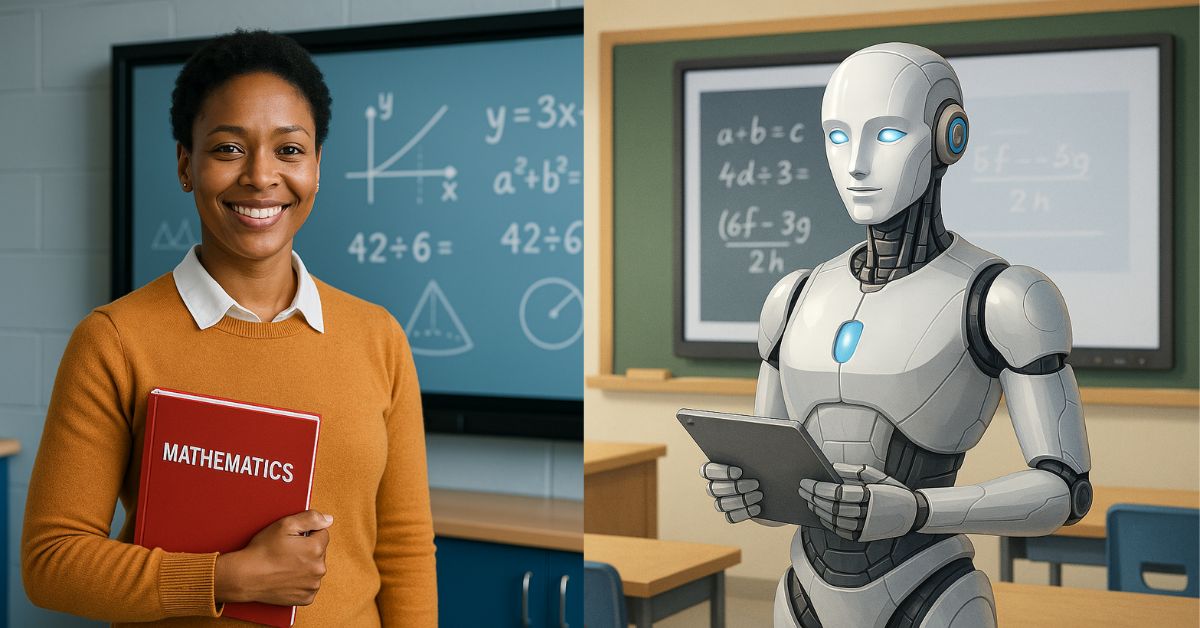

AI tutoring has reached a point where it can match or sometimes outperform human instruction in specific, well-defined learning tasks, but current evidence does not show that AI robots can replace human tutors across education. Recent studies show strong potential for personalized practice and tutoring, while research involving schoolchildren also finds that human support can substantially improve engagement with AI learning systems. Physical AI teaching robots are appearing in schools, but they are currently better understood as educational assistants or supplements rather than full replacements for teachers and tutors.
Can an AI Robot Replace a Human Tutor? What the Latest Research Shows in 2026
Introduction
The question of whether an AI robot can replace a human tutor is moving from science fiction into real classrooms.
In 2026, AI tutoring systems are being tested at scale, researchers are comparing AI-assisted learning with traditional instruction, and physical robots are beginning to appear in schools. In India, for example, schools have introduced AI-powered teaching robots as classroom learning assistants, while research teams are studying how children interact with robot tutors.
At the same time, the evidence is more complicated than the idea that a robot can simply take over a tutor’s job.
A major 2026 study of AI tutoring in Tennessee middle schools found measurable improvements in mathematics achievement among students using Khan Academy’s AI tutor, Khanmigo. But the gains were similar to those associated with Khan Academy practice without AI assistance, and students did not consistently use the AI tutor when they made mistakes.
Other research has produced stronger results for AI tutoring. A 2025 randomized controlled trial at Harvard University found that students using a specially designed AI tutor achieved greater learning gains in the tested physics setting than students receiving active-learning classroom instruction.
The emerging picture is therefore not simply AI versus humans. It is increasingly about how AI and human educators can work together.
What Happened?
The rapid development of generative AI has created a new generation of digital tutors capable of answering questions, giving explanations, generating exercises and adapting conversations to individual students.
Some systems are entirely software-based. Others are being connected to physical robots that can speak, listen, display information and interact with students.
That distinction matters.
An AI tutor does not necessarily need to be a robot. A student can interact with an AI tutor through a computer, tablet or phone.
An AI teaching robot, by contrast, combines AI software with a physical machine. The robot may use voice recognition, cameras, screens, sensors and movement to create a more physical learning experience.
Recent developments show that both approaches are advancing.
In July 2026, Lourdes Central School in Mangaluru introduced an AI-powered teaching robot called Iris. The school said students would interact with the robot during lessons and special school activities.
Another report from Karnataka described an AI teaching robot called Iris being introduced at a government primary school in Udupi. The system was presented as a supplement to teachers rather than a replacement for them.
The technology is also being studied scientifically. A 2026 study published in Humanities and Social Sciences Communications examined AI-robot-supported learning among 42 children aged 5–6 in China. Researchers reported higher persistence, problem-solving ability, emotional response and active learning behavior in the AI-robot group in the specific preschool health-education setting studied.
These developments help explain why the question of replacing human tutors is becoming more serious.
But they do not establish that replacement is already possible.
Key Details
Several findings from recent research are particularly important.
1. AI tutoring can produce measurable learning gains
A randomized controlled trial published in Scientific Reports in 2025 compared an AI tutor with active-learning classroom instruction in an undergraduate physics course.
The experiment involved 194 students. The researchers reported significantly greater learning gains for the AI-tutored group in the study’s particular educational setting.
This is significant because it moves the discussion beyond demonstrations of what AI can do. The researchers actually measured learning outcomes.
However, one study in one subject and age group cannot establish that AI tutoring is superior to human tutoring everywhere.
2. Large-scale school evidence is more mixed
A two-year randomized study published by the National Bureau of Economic Research in August 2026 examined Khanmigo in 18 Tennessee middle schools.
The study found that assigning students to use Khan Academy with its AI tutor increased mathematics achievement by about 1.3 national percentile ranks per term, or approximately 0.06 to 0.08 standard deviations over a school year.
But the researchers also found an important limitation: students did not consistently use the AI tutor.
Although 96% of students tried Khanmigo at least once, the median student used it on only about one-third of practice days and during just 17% of exercise sessions in which they made a mistake.
That finding illustrates a problem that software alone cannot necessarily solve.
Giving a child access to an AI tutor does not guarantee that the child will use it effectively.
3. Human support can make AI tutoring more effective
Research involving younger children provides another important piece of the picture.
A 2026 study from the National Student Support Accelerator examined two randomized controlled trials involving elementary-school students using an AI literacy platform.
The researchers found that human tutors increased students’ engagement with the platform by 71% to 80%, although the intervention did not improve reading achievement in the study. The researchers concluded that access to an AI system alone was insufficient to ensure meaningful engagement.
This is particularly relevant for parents considering AI tutors for children.
A seven-year-old, for example, may need encouragement, routine, emotional reassurance and help understanding how to use a learning tool—not simply access to a chatbot.
4. Some research suggests AI can perform similarly to human tutoring
A very recent September 2026 preprint called StudentBench compared AI and human tutoring for GRE-related learning.
The researchers reported statistically equivalent learning gains between AI and expert human tutoring in their experiment, while finding that the strongest AI tutor outperformed the human tutor on average in five of seven GRE domains tested.
Because this work is a newly released preprint rather than an established peer-reviewed body of evidence, its findings should be treated as emerging research rather than definitive proof that AI has surpassed human tutors.
Still, it demonstrates how quickly the comparison is changing.
Background: Why AI Tutors Are Becoming So Powerful
Traditional one-to-one tutoring can be highly personalized, but it is difficult and expensive to provide at scale.
A human tutor can notice when a child is confused, change an explanation, encourage the student, provide examples and decide when to move on.
Modern AI systems attempt to reproduce parts of that process digitally.
An AI tutor can potentially:
- Explain the same concept in different ways.
- Generate additional practice questions.
- Give immediate feedback.
- Adjust the difficulty of exercises.
- Answer questions at any time.
- Repeat an explanation without becoming tired.
- Provide personalized practice.
- Track some aspects of student activity.
- Support students outside normal tutoring hours.
This scalability is one of AI’s strongest advantages.
The OECD’s Digital Education Outlook 2026 identifies several emerging models for generative-AI tutoring, including systems that augment human tutors, independent AI tutoring and AI integrated into classroom work. Its framework reflects the growing need to evaluate these systems using empirical evidence rather than assumptions about what AI might eventually achieve.
What Officials and Organizations Said
UNESCO has emphasized a human-centered approach to AI in education.
Its AI Competency Framework for Teachers describes a changing relationship among teachers, students and AI and identifies competencies covering human-centered thinking, AI ethics, AI foundations, AI pedagogy and professional learning.
UNESCO’s current education guidance also warns about over-reliance on AI and emphasizes creativity, critical thinking and human agency. The organization has argued that AI should be used as a tool that expands human capabilities rather than simply replacing human thought.
Khan Academy has taken a similar cautious approach with Khanmigo. Its guidance for younger learners includes parental or school involvement, reflecting the organization’s emphasis on supervision and support when children use AI educational tools.
These positions do not mean AI cannot teach.
Rather, they highlight the distinction between automating instruction and supporting education.
Can a Physical AI Robot Actually Replace a Human Tutor?
Not based on current evidence.
A physical robot can provide some functions associated with tutoring. It can speak with a child, ask questions, deliver lessons, provide feedback and potentially respond to the child’s behavior.
Research is already investigating these possibilities.
A 2026 study in Frontiers in Robotics and AI examined a multi-robot learning scenario in which one robot acted as a tutor and another as a novice peer. The researchers described the work as an exploratory feasibility study involving child-robot interaction.
But successful interaction with a robot is not the same thing as demonstrating that a robot can replace a skilled human tutor.
Human tutors do much more than deliver information.
They may recognize frustration, notice a child’s confidence changing, communicate with parents, understand family circumstances, modify goals and motivate a child who does not want to study.
Those areas are harder to measure and automate.
Why This Matters for Parents
For parents, the important question may not be whether AI will completely replace tutors.
A more practical question is:
Where can AI provide useful tutoring support, and where does a child still need a human?
AI can be particularly useful for repetitive academic tasks.
For example, a student struggling with multiplication could ask an AI tutor for additional practice. A child learning vocabulary could receive quizzes at different difficulty levels. An older student could ask for another explanation of a difficult science concept.
But parents may still want human involvement for goal-setting, motivation, emotional support, monitoring progress and deciding whether a deeper learning problem exists.
For younger children, this distinction can be even more important.
A child may understand an answer but still need encouragement to keep trying.
A human adult can also decide when technology should be put away.
AI Tutor vs Human Tutor: What Each Does Best
| Area | AI Tutor | Human Tutor |
|---|---|---|
| Immediate answers | Strong | Strong |
| Repetition | Very strong | Strong |
| Personalized practice | Strong | Strong |
| Availability | Can be available anytime | Limited by schedule |
| Cost at scale | Potentially lower | Usually higher |
| Emotional understanding | Limited and inconsistent | Stronger |
| Motivation | Can encourage | Can respond to individual behavior |
| Family context | Limited | Can understand broader context |
| Physical presence | Only with a robot/device | Yes |
| Judgment about a child’s needs | Limited | Human judgment remains important |
| Accountability | Requires human oversight | Direct human responsibility |
This table is a practical comparison, not a claim that every AI system or human tutor performs identically.
What the Research Says About K-12 Education
A 2025 systematic review in npj Science of Learning examined 28 studies involving 4,597 K-12 students.
The review found that AI-driven intelligent tutoring systems generally showed positive effects on learning and performance, but their benefits were reduced when compared with non-intelligent tutoring systems. The researchers also called for more research using longer interventions, larger samples and more diverse populations.
That finding is important because it shows why broad statements such as “AI is better than teachers” are premature.
Educational outcomes depend on:
- The student’s age.
- The subject being taught.
- The quality of the AI system.
- How often students use it.
- Whether students actively think or simply request answers.
- How the technology is integrated into teaching.
- Whether adults supervise its use.
- The quality of the underlying educational content.
In other words, AI tutoring is not one single technology.
The Biggest Risk May Be How Students Use AI
One concern is that an AI tutor can make learning feel easier without necessarily making students better learners.
If a student asks for an answer every time a problem becomes difficult, the system may help the student complete the task without developing the underlying skill.
That is why tutoring systems designed to ask questions, provide hints and encourage reasoning may be more educationally useful than systems that simply provide solutions.
The 2026 Khanmigo study specifically examined a configuration designed to coach students rather than simply give answers.
UNESCO has similarly highlighted concerns about students outsourcing their thinking to AI and has emphasized the importance of critical thinking and human agency.
What Happens Next?
The most likely near-term development is not a sudden replacement of human tutors by robots.
Instead, education is likely to see more hybrid tutoring models, in which AI handles some repetitive and personalized tasks while teachers or tutors provide supervision, motivation, judgment and human interaction.
This approach is already reflected in current research.
Stanford’s SCALE Initiative concluded in August 2026 that high-impact tutoring remains defined by live human-led instruction and that current evidence supports using AI to enhance tutor effectiveness and educator capacity rather than replacing high-impact tutoring. It also highlighted the importance of privacy, safety and human oversight for direct-to-student AI systems.
Physical AI robots may become another layer of that model.
Schools could use robots for demonstrations, practice sessions, language interaction, basic questioning or technology education while human teachers remain responsible for the broader learning environment.
The exact balance will depend on evidence, cost, safety, privacy and educational outcomes.
What Does This Mean for the Future of Tutoring?
The tutoring industry is likely to change substantially as AI becomes cheaper and more capable.
The biggest change may not be the disappearance of tutors but a change in what tutors do.
A human tutor who once spent much of a session explaining basic concepts could increasingly use AI to generate exercises and explanations, leaving more time for diagnosing learning difficulties, motivating students and working on higher-level skills.
That would make the tutor an AI-supported educator rather than an AI replacement.
At the same time, some families may use AI tutoring as a lower-cost supplement when one-to-one human tutoring is unavailable.
That could make personalized educational assistance more accessible.
But affordability alone does not prove educational equivalence.
A low-cost AI system that a child rarely uses may be less useful than a human tutor who keeps the student engaged.
Conclusion
So, can an AI robot replace a human tutor?
The latest evidence suggests that AI can already perform surprisingly well in specific tutoring tasks. Controlled studies have shown meaningful learning gains, and very recent research has reported AI tutoring outcomes comparable with human tutoring in particular test-preparation settings.
Physical AI teaching robots are also moving from research laboratories into real educational environments, including schools in India.
But the evidence does not establish that robots can replace human tutors across subjects, ages and learning situations.
For children especially, current research points toward the value of human involvement. Human tutors can improve engagement with AI platforms, while major education organizations continue to emphasize human agency, critical thinking, ethics and supervision.
The more realistic near-term future is therefore not robot versus tutor.
It is robot and AI working alongside the tutor.
That distinction could define the next stage of education technology.
Frequently Asked Questions
1. Can an AI robot replace a human tutor?
Current evidence does not establish that AI robots can fully replace human tutors. AI can perform many tutoring tasks effectively, but human support remains important for motivation, judgment, engagement, emotional support and broader educational decisions.
2. Are AI tutors as effective as human tutors?
The answer depends on the subject, age group, AI system and study design. Some recent experiments have found AI tutoring can match or outperform human instruction in specific settings, while other studies have found more limited benefits.
3. Are AI teaching robots being used in schools?
Yes. Schools have begun introducing physical AI-powered teaching robots. For example, Lourdes Central School in Mangaluru introduced an AI teaching robot called Iris in July 2026. Lourdes Central School
4. Can AI tutors help young children?
Research suggests AI and robot-based learning can engage young children, but the evidence is still developing. A 2026 study involving 5- to 6-year-old children found positive effects on persistence, problem-solving and active learning in a specific AI-robot-supported preschool health-education setting. DOI
5. What are the advantages of an AI tutor?
AI tutors can provide immediate feedback, personalized practice, repeated explanations and potentially round-the-clock access. They can also scale to large numbers of students at a lower marginal cost than one-to-one human tutoring.
6. What can a human tutor do that AI cannot easily replace?
Human tutors can respond to complex emotional and social cues, understand family and classroom context, motivate students personally and exercise judgment about how and when a child should learn. Current education guidance continues to emphasize human agency and critical thinking. UNESCO
7. Is AI tutoring better than traditional tutoring?
There is no universal answer. Research results vary by educational setting, student age, subject, technology and implementation. The strongest current evidence supports evaluating AI as a tutoring tool rather than assuming it is automatically better or worse than human instruction.
8. What is the likely future of AI tutoring?
A hybrid model is increasingly supported by the evidence: AI handles some personalized practice and instructional tasks while teachers and tutors provide human guidance, motivation, supervision and judgment. Stanford’s SCALE Initiative currently describes AI as a tool that can enhance tutor effectiveness and educator capacity rather than replace high-impact tutoring.