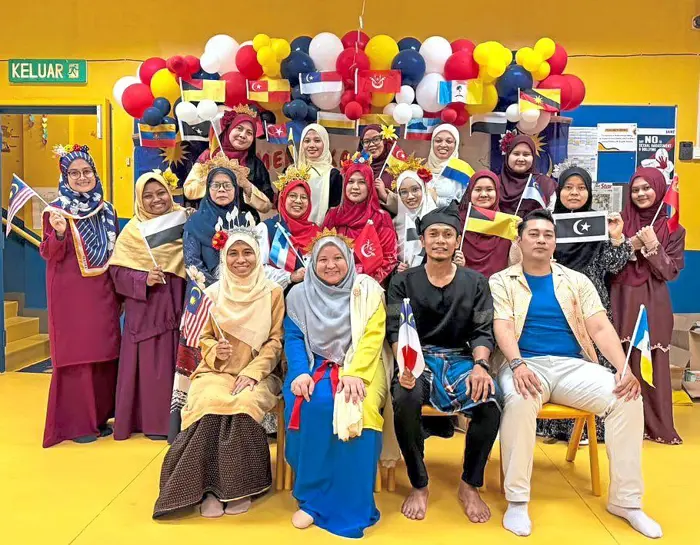

A preschool teacher is using the classroom as a way to help young children understand what makes Malaysia unique: its mix of cultures, languages, traditions, food and shared experiences. The approach reflects a broader role for early childhood education, where children can learn about diversity through age-appropriate activities rather than only through textbooks. Malaysia’s multicultural character gives preschool educators many opportunities to introduce children to different communities while encouraging respect and a sense of belonging.
Introduction
A preschool classroom can be much more than a place where children learn their ABCs, numbers and basic social skills. For young children in Malaysia, it can also become their first window into the country’s remarkable cultural diversity.
The headline “Heart And Soul: Preschool teacher shows children what makes Malaysia unique” points to a simple but meaningful idea: children can begin understanding their country through the things they see and experience around them — food, festivals, languages, traditional clothing, music, stories and the customs of different communities.
Malaysia’s identity has been shaped by people from different ethnic, cultural and religious backgrounds. Malay, Chinese, Indian and Indigenous communities contribute to the country’s diverse traditions, while Sabah and Sarawak add further layers of cultural heritage.
That diversity is particularly meaningful in early childhood education because young children are naturally curious. A classroom activity involving a traditional food, a cultural celebration or a different language can become an opportunity to ask questions and learn that people may have different customs while still sharing the same country.
Recent Malaysian education and community initiatives have continued to highlight this idea of learning through cultural exposure. A September 2026 feature on what makes Malaysia special described multicultural communities, festivals, food, languages, history, nature and shared experiences as important parts of the country’s identity.
What Happened?
The supplied headline describes a preschool teacher introducing children to the characteristics that make Malaysia distinctive.
Although the exact original classroom activity and the teacher’s identity could not be independently verified from currently indexed sources, the central theme is clear: using early education to introduce children to Malaysia’s cultural diversity.
This approach can include simple experiences that children can understand.
For example, children can learn that Malaysia is home to different communities with their own languages, foods, clothing, music and celebrations. They can discover that Hari Raya Aidilfitri, Chinese New Year, Deepavali, Christmas, Gawai Dayak and Kaamatan are among the celebrations associated with different communities across the country.
The purpose is not necessarily to teach preschoolers a complicated history lesson.
Instead, cultural learning at this age can begin with everyday questions:
- Why do families celebrate different festivals?
- Why do people speak different languages?
- Why are there so many kinds of Malaysian food?
- Why do traditional clothes look different?
- What do children from different communities have in common?
- Why should we respect another person’s traditions?
These questions allow children to discover that diversity is part of everyday Malaysian life.
Why Cultural Learning Matters in Preschool
Early childhood is an important period for developing social understanding.
Preschool children are learning how to communicate, cooperate, share, listen and respond to people who may not have exactly the same experiences as they do.
Research published in the Early Childhood Education Journal in 2026 examined preschool teachers’ approaches to multicultural classrooms and found that cultural and linguistic differences can create both opportunities and challenges. The study highlighted the importance of culturally responsive teaching and environments in which children can interact with different backgrounds.
For Malaysian children, cultural education can therefore begin with experiences that are already familiar to them.
A child may have a friend who speaks Mandarin at home. Another may speak Tamil. Another may speak Malay or an Indigenous language. One family may celebrate Deepavali, another Chinese New Year, another Hari Raya, while others may celebrate Christmas or different traditional festivals.
The classroom provides an opportunity to make those differences understandable rather than unfamiliar.
Key Details
The broader idea behind the story can be understood through several characteristics commonly associated with Malaysian identity.
1. Malaysia’s Multicultural Communities
One of the most visible features of Malaysia is its multicultural population.
Malay, Chinese, Indian and Indigenous communities, among others, have contributed to the country’s cultural landscape. Sabah and Sarawak are also home to numerous Indigenous communities with their own traditions and languages.
For preschoolers, this diversity can be introduced through stories, pictures, music, costumes, food and classroom celebrations.
The goal is not to suggest that every Malaysian experiences culture in exactly the same way. Instead, children can learn that different families have different traditions.
2. Many Festivals
Festivals provide natural opportunities for children to learn about culture.
Malaysia’s calendar includes celebrations associated with different religious and cultural communities. Hari Raya Aidilfitri, Chinese New Year, Deepavali, Christmas, Gawai Dayak and Kaamatan are examples highlighted in recent Malaysian educational material discussing the country’s cultural diversity.
A preschool teacher can turn such occasions into learning opportunities through songs, stories, crafts and discussions.
Children may not understand every historical detail at a young age, but they can understand basic ideas such as kindness, respect, sharing and celebrating with others.
3. Malaysian Food
Food is another accessible way of introducing children to culture.
Nasi lemak, roti canai, satay, char kway teow and laksa are among the foods commonly associated with Malaysia’s diverse culinary traditions.
For young children, food can create an immediate connection.
A teacher might show photographs, discuss ingredients, explain where particular dishes are commonly enjoyed or invite children to talk about foods they eat at home.
The activity can become a lesson about both food and family traditions.
4. Malaysia’s Languages
Malaysia’s linguistic diversity is another important part of its identity.
Bahasa Melayu is the national language, while English, Mandarin, Tamil, Chinese dialects and Indigenous languages are also spoken across different communities.
A preschool classroom can acknowledge this diversity through greetings, songs, stories and simple vocabulary activities.
The emphasis should be on curiosity rather than competition.
Learning that a word can sound different in another language can help children understand that language is one of the many ways people express identity.
5. Traditional Clothing and Arts
Traditional clothing, music, dance and crafts can make cultural learning highly visual for young children.
A child may recognize a baju Melayu, baju kurung, cheongsam, sari or traditional clothing associated with communities in Sabah and Sarawak.
Similarly, traditional dances and musical instruments can help children see that Malaysian culture is made up of many artistic traditions.
These activities can make abstract ideas about culture easier for preschoolers to understand.
Background: What Makes Malaysia Unique?
The question of what makes Malaysia unique does not have one single answer.
Malaysia’s identity is the result of many communities, historical influences, geographic regions and traditions developing alongside one another.
The Malaysian government’s own planning material has previously described the country’s multi-faceted character in terms of inclusiveness and diversity, while Malaysian educational resources explicitly teach children about respecting the cultures and customs of different ethnic groups.
The country’s geography also contributes to this diversity.
Peninsular Malaysia, Sabah and Sarawak have different histories, communities, landscapes and cultural traditions. That means a child learning about Malaysia can eventually discover far more than what exists in their own neighbourhood.
A preschool lesson may therefore be the beginning of a much larger journey.
Malaysia Day Gives Teachers a Natural Learning Opportunity
Malaysia Day, observed on September 16, provides an especially relevant opportunity for schools and preschools to discuss national identity.
In 2026, Malaysian institutions and educational organizations used Malaysia Day activities to emphasize unity, cultural heritage and diversity.
For example, a September 2026 education feature described Malaysia as a place where different cultures, languages and traditions exist alongside shared experiences.
A Bernama report on a 2026 National Day and Malaysia Day-related programme also highlighted children’s participation in activities designed to build confidence, cooperation and skills. Preschool teachers involved in the programme said such exposure could help children become more mature, independent, cooperative and confident.
These examples show how national celebrations can move beyond flags and decorations.
They can become opportunities for children to understand the people and traditions that make up their country.
What Preschool Teachers Can Teach Through Culture
Cultural education does not have to involve complicated lessons.
For preschool children, simple activities can be effective.
A teacher might:
- Read stories featuring children from different Malaysian communities.
- Introduce traditional music and instruments.
- Teach simple greetings in different Malaysian languages.
- Display traditional clothing.
- Talk about Malaysian festivals.
- Let children draw Malaysian landmarks.
- Introduce local fruits and foods.
- Play traditional children’s games.
- Discuss why people have different family traditions.
- Encourage children to share something special about their own families.
These activities can also support language development, creativity, social interaction and communication.
A Malaysian preschool provider, for example, describes early childhood education as a broader developmental journey involving care, safety, nutrition, health and education rather than academic learning alone.
What Officials and Organizations Have Said
There does not appear to be a publicly indexed official statement specifically connected to the exact headline supplied for this article.
However, Malaysian educational organizations have repeatedly emphasized cultural diversity and learning through meaningful experiences.
The Malaysian education context also recognizes the importance of teaching children about mutual respect and the cultures and taboos of different communities. Educational material built around the theme “Unique Malaysia” lists understanding and respecting different cultures and ethnicities as learning objectives.
Meanwhile, recent preschool programmes have emphasized confidence, cooperation and development through participation in activities linked to National Day and Malaysia Day celebrations.
These documented examples provide useful context for understanding why a teacher-led cultural activity can have value beyond entertainment.
Why This Matters
Teaching children about Malaysian culture at an early age can help make diversity familiar.
That matters because children do not automatically understand cultural differences in the same way adults do. They learn through conversations, observation and repeated experiences.
When a classroom treats different traditions as something worth learning about, children can begin to see differences as normal parts of society.
This does not mean every child needs to participate in every cultural or religious practice.
Rather, children can learn a basic principle: other families may live differently, and those differences deserve understanding and respect.
The approach also allows teachers to build connections between home and school.
A child might bring a family story into the classroom. Another might talk about a festival. Someone else might introduce a food their grandparents prepare.
In that way, the children themselves become part of the lesson.
Cultural Learning Can Go Beyond Malaysia Day
Although Malaysia Day is a natural occasion for these activities, cultural education does not need to stop after September 16.
Malaysia’s cultural diversity exists throughout the year.
Teachers can use different occasions to explore:
- Traditional games
- Malaysian wildlife
- Local food
- Folk stories
- Traditional music
- National symbols
- Historical landmarks
- Festivals
- Traditional clothing
- Languages
- Sabah and Sarawak heritage
- Malaysian arts and crafts
This creates an ongoing learning experience rather than a one-day celebration.
The Role of Parents
Parents can reinforce the same lessons at home.
A simple family activity could involve asking a child to name three Malaysian foods, learning about a local landmark or watching a traditional dance together.
Families can also visit museums, heritage areas, cultural events and historical sites when practical.
For young children, these experiences can make history and culture more tangible.
A museum object, traditional building or local dish can generate questions that a textbook alone may not produce.
What Happens Next?
There is no independently verified information available about a specific next step associated with the preschool teacher featured in the supplied headline.
The broader trend, however, is clear: early childhood education is increasingly being discussed as a space where children’s social, emotional and cultural development matters alongside academic preparation.
A recent Malaysian education discussion about early childhood education argued that the role of preschool teachers is expanding beyond traditional content delivery, with relationship-building, emotional regulation, inclusion and social-emotional development becoming increasingly important.
For children, that means the classroom can be a place to learn not only what Malaysia is, but also how people from different backgrounds live together.
A Simple Lesson With a Bigger Message
The significance of a preschool teacher introducing children to Malaysian culture may seem small.
A group of young children learning about food, clothing, festivals or languages may look like an ordinary classroom activity.
But those small experiences can introduce bigger ideas.
Children can learn that Malaysia contains many stories.
They can learn that their classmates may have different family traditions.
They can discover that a national identity does not require everyone to be identical.
And they can begin to understand that diversity and togetherness can exist at the same time.
That may be one of the clearest answers to the question of what makes Malaysia unique.
Malaysia’s uniqueness is not represented by one food, one festival, one language or one community. It is found in the many cultures, traditions, landscapes and shared experiences that exist within the same country.
For a preschool teacher, helping children discover that idea can begin with something as simple as a conversation in a classroom.
FAQs
1. What makes Malaysia unique?
Malaysia is distinguished by its multicultural communities, diverse languages, festivals, food traditions, historical influences and geographic diversity. Its cultural identity has been shaped by many communities living within one country.
2. Why should preschool children learn about Malaysian culture?
Cultural learning can help young children understand that families and communities may have different traditions, languages and customs. Age-appropriate activities can also support communication, curiosity, cooperation and respect.
3. What Malaysian festivals can children learn about?
Children can learn about celebrations including Hari Raya Aidilfitri, Chinese New Year, Deepavali, Christmas, Gawai Dayak and Kaamatan, while learning that different communities observe different traditions.
4. How can teachers teach Malaysian culture to preschoolers?
Teachers can use stories, songs, crafts, traditional games, food-related activities, clothing, music and simple discussions about festivals and family traditions.
5. What is Malaysia Day?
Malaysia Day is observed on September 16. It provides an opportunity to discuss Malaysia’s formation, shared national identity and the diversity of communities across the country.
6. Why is Malaysia’s food important to its cultural identity?
Food reflects the country’s many cultural influences. Malaysian cuisine includes dishes associated with different communities and regions, making food an accessible way for children to explore cultural heritage.
7. How can parents teach children about Malaysian diversity?
Parents can introduce children to local foods, festivals, languages, traditional stories, museums, historical places, music and cultural events. Simple conversations about why families have different traditions can also be valuable.
8. Is cultural education only important during Malaysia Day?
No. Malaysia Day provides a useful occasion, but cultural learning can take place throughout the year through everyday classroom activities, stories, festivals, food, music, language and local history.